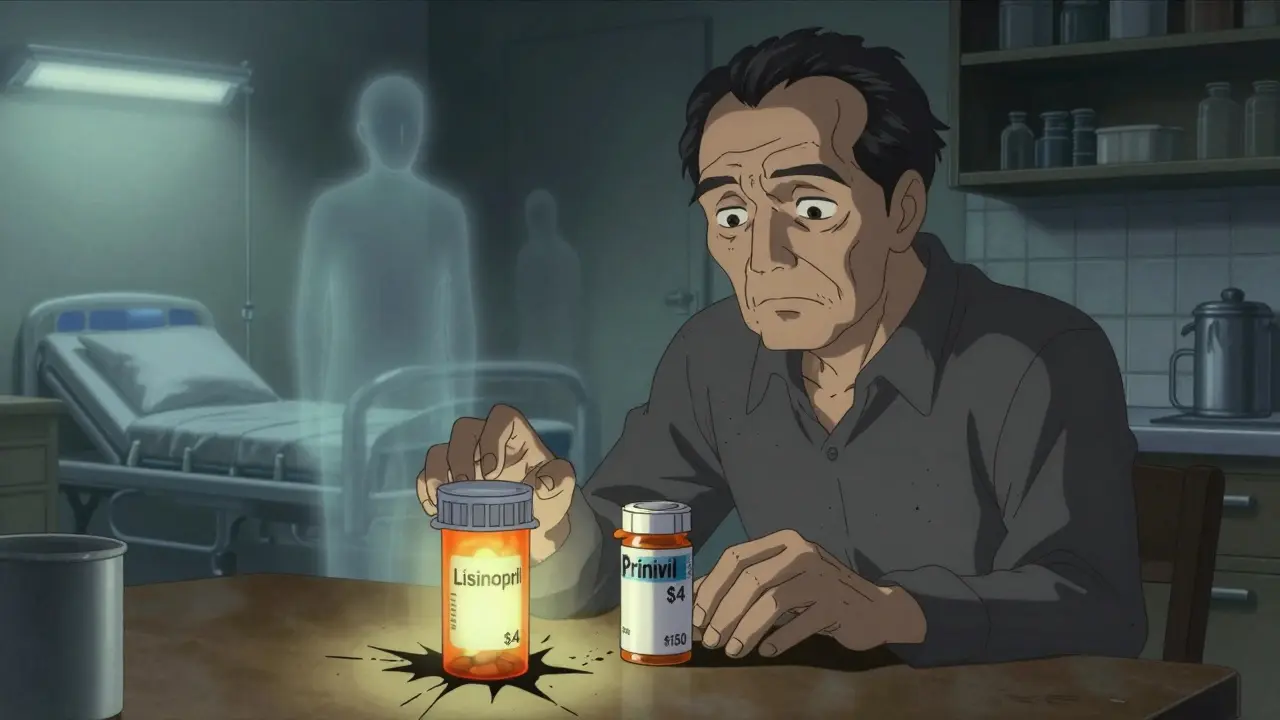
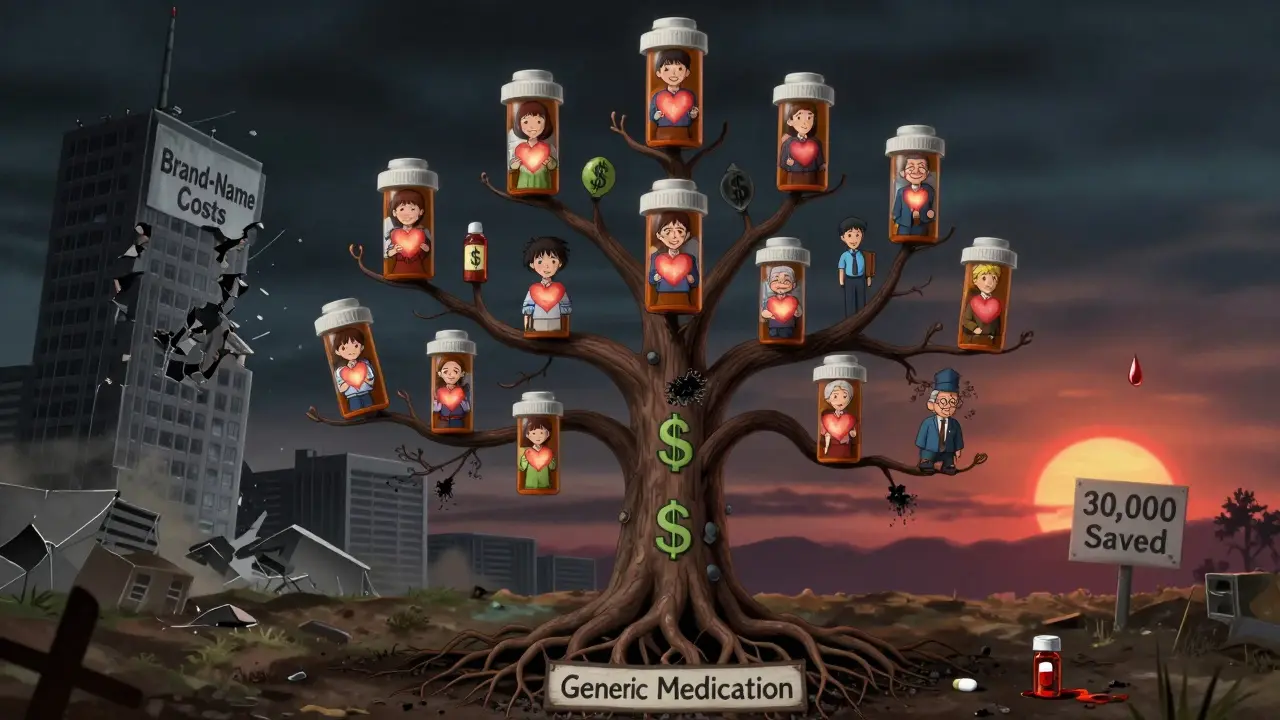
For millions of people managing chronic conditions like high blood pressure, diabetes, or asthma, the real cost isn't just the price of the pill-it's the price of skipping it. A 65-year-old with type 2 diabetes might pay $150 a month for their brand-name medication. Switch to the generic, and that drops to $25. That’s $1,500 saved every year. Over a lifetime of treatment? That’s more than $30,000. And it’s not just about money. It’s about staying healthy, avoiding hospital visits, and not having to choose between medicine and groceries.
Why Generics Work Just as Well
Generic drugs aren’t cheap knockoffs. They’re the exact same medicine as the brand-name version, just without the marketing. The FDA requires them to have the same active ingredients, strength, dosage form, and route of administration. That means if you take generic lisinopril for high blood pressure, it works the same way as Prinivil. The only differences? The color, shape, or filler ingredients-and those don’t change how the drug affects your body.The key is bioequivalence. To get approved, a generic must show it delivers the same amount of medicine into your bloodstream as the brand-name drug, within a 90% confidence interval of 80% to 125%. In plain terms: your body absorbs it the same way. Thousands of studies back this up. A 2020 review in the Journal of the American Medical Association found no difference in effectiveness or safety between generics and brand-name drugs for heart disease, depression, and epilepsy.
Still, some people worry. They remember a time when generics looked different or didn’t work as well. But those days are mostly gone. Today’s generics are held to the same strict standards as the originals. The FDA inspects manufacturing facilities for generics just like it does for brand-name companies. If a generic fails, it gets pulled. There’s no second chance.
The Real Cost Difference
Let’s look at real numbers. For someone managing hypertension:- Brand-name lisinopril (Prinivil): $40-$50 per month
- Generic lisinopril: $4-$6 per month
That’s a 90% drop. Over 10 years, that’s $4,000 saved. For diabetes:
- Brand-name metformin ER (Glucophage XR): $120 per month
- Generic metformin ER: $10 per month
That’s $1,320 saved each year. Multiply that by 20 years, and you’re looking at over $26,000. And this isn’t just for one drug. Most people with chronic conditions take two or three. A patient on a regimen of generic amlodipine, metformin, and atorvastatin might pay $15 a month total. The brand-name version? Over $400.
It’s not just about the price tag. It’s about what happens when people can’t afford their meds. A CDC study found that 1 in 4 rural patients skip doses because of cost. That leads to worse outcomes: more ER visits, more hospital stays, more complications. A 2023 study from East Street Pharmacy showed patients on generics were 18-22% more likely to stick with their treatment long-term. That’s not a small difference-it’s life-changing.
How Generics Save the System Money
It’s not just individuals who benefit. The whole healthcare system saves billions. In 2020, generics made up 90% of all prescriptions filled in the U.S. But they accounted for only 18% of total drug spending. That means $338 billion was saved that year alone by choosing generics over brand-name drugs. Over a decade, that number hits $2.4 trillion.Why does this matter? Because when people stay on their meds, they avoid complications. A diabetic who keeps their blood sugar under control doesn’t end up with kidney failure. A hypertensive patient who takes their pills doesn’t have a stroke. Fewer complications mean fewer hospitalizations. A 2023 analysis from Farmington Drugs showed that patients using generics and participating in medication therapy management programs had 20-30% fewer emergency room visits.
And it’s not just pills. Biosimilars-generic versions of complex biologic drugs-are now entering the market. Drugs for rheumatoid arthritis, cancer, and Crohn’s disease are seeing price drops of 50-70% once biosimilars arrive. The IQVIA Institute predicts biosimilars will save the U.S. healthcare system another $300 billion over the next 10 years.
Why People Don’t Use Them (And How to Fix It)
You’d think everyone would choose generics. But barriers still exist.Myth #1: “Generics aren’t as strong.” This comes from old experiences or confusion over inactive ingredients. Some people notice a different pill shape or feel a change in how they respond. But that’s rarely the drug itself-it’s the filler. For 99% of people, it makes zero difference. Education helps. One study showed that when pharmacists explained bioequivalence, patient acceptance jumped 45%.
Myth #2: “My insurance won’t cover it.” Most plans actually prefer generics. They have lower copays. But some insurers still push brand-name drugs if they’re paid by the manufacturer. That’s changing. The 2022 Inflation Reduction Act limits out-of-pocket costs for Medicare Part D users to $35 per month for insulin and caps total spending. Many of those savings come from switching to generics.
Myth #3: “My doctor doesn’t offer them.” Doctors don’t always know what’s available. Pharmacists do. Ask your pharmacist: “Is there a generic for this?” They can check patent status, insurance formulary, and even help you apply for manufacturer discounts. Many pharmacies offer $4 generic programs for common chronic meds.
How to Maximize Your Savings
If you’re managing a chronic condition, here’s how to lock in lifetime savings:- Ask for the generic every time you get a new prescription. Say, “Is there a generic version available?”
- Use mail-order pharmacies for maintenance meds. They often have lower prices and deliver 90-day supplies.
- Check the FDA’s Orange Book to see if a generic is approved and when patents expire. It’s free and public.
- Enroll in Medication Therapy Management (MTM) if you’re on Medicare Part D. Pharmacists review your whole regimen and find cheaper alternatives.
- Ask about patient assistance programs. Many drugmakers offer free or discounted generics to low-income patients.
- Don’t assume brand = better. If your doctor says, “This one’s better,” ask why. Is it proven? Or just more expensive?
For people on fixed incomes, this isn’t a luxury-it’s survival. A single mother with asthma and high blood pressure might spend $800 a month on meds without generics. With them? $120. That’s rent, groceries, and gas left over. That’s peace of mind.
The Bigger Picture
The global generic drug market is growing fast. It was worth $232 billion in 2022 and is projected to hit $357 billion by 2028. Why? Because chronic diseases are rising. Diabetes, heart disease, and COPD aren’t going away. And as more patents expire-$150 billion in brand-name sales will face generic competition between 2023 and 2027-the savings will keep growing.India and Brazil show what’s possible. In India, generic HIV drugs cut treatment costs by 95% and increased adherence by 40%. In Brazil, government policies that pushed generics for hypertension and diabetes saved $1.2 billion annually in healthcare costs. These aren’t theoretical-they’re real results.
The system isn’t perfect. Some complex generics still take years to develop. Some insurers still favor brands. But the science is clear. The data is clear. The savings are real.
If you’re living with a chronic condition, your medication is one of the most important things you’ll ever buy. Don’t overpay. Don’t skip doses. Ask for the generic. It’s not just cheaper-it’s just as good. And over time, it could save you tens of thousands of dollars-and maybe even your life.
Are generic drugs really as effective as brand-name drugs?
Yes. The FDA requires generic drugs to have the same active ingredients, strength, dosage form, and bioequivalence as the brand-name version. This means they work the same way in your body. Studies involving over 50 million patients confirm no meaningful difference in effectiveness or safety for conditions like high blood pressure, diabetes, and depression.
Why are generic drugs so much cheaper?
Generic manufacturers don’t have to repeat expensive clinical trials or pay for marketing campaigns. They only need to prove their drug is bioequivalent to the original. That cuts development costs by 80-90%. Those savings get passed on to patients. A brand-name drug might cost $50 a month because of R&D and advertising. The generic? $4.
Can I switch from a brand-name drug to a generic without talking to my doctor?
In most cases, yes. Pharmacists can substitute a generic for a brand-name drug unless your doctor specifically wrote “Dispense as Written” or “Do Not Substitute.” Even then, you can ask your doctor to change the note. Most doctors support generics when they’re available because they improve adherence and lower costs.
What if I feel different on a generic drug?
If you notice a change, talk to your pharmacist. Sometimes, differences in inactive ingredients (like fillers or dyes) can cause minor reactions in sensitive people. But this doesn’t mean the drug isn’t working. Your pharmacist can check if another generic version is available or help you switch back temporarily while you discuss options with your doctor.
Are there any chronic conditions where generics aren’t available?
Most common chronic conditions have generics. Hypertension, diabetes, asthma, high cholesterol, and depression all have widely available generics. Some newer or complex drugs-like certain biologics for autoimmune diseases-still only have brand-name versions. But biosimilars (generic-like versions of biologics) are now entering the market and will bring down prices for these too.
Does Medicare cover generic drugs?
Yes. Medicare Part D plans cover both brand-name and generic drugs, but generics usually have lower copays. The Inflation Reduction Act caps insulin costs at $35 per month and limits out-of-pocket spending for all Part D drugs. Most beneficiaries save hundreds per year by choosing generics over brand-name options.
How can I find out if a generic is available for my medication?
Ask your pharmacist-they check this daily. You can also search the FDA’s Orange Book online for free. It lists all approved generic drugs and their patent expiration dates. Many pharmacies also offer $4 generic lists for common chronic condition meds like metformin, lisinopril, and atorvastatin.

Harrison Duncombe
I have been working in the pharmaceuticals industry for over two decades and have developed a passion for medications and their impact on health. I enjoy researching new treatments and writing about their effects on diseases. Sharing my knowledge about supplements is something I find fulfilling. Through my work, I aim to provide valuable insights and guidance to those seeking understanding in this complex field.