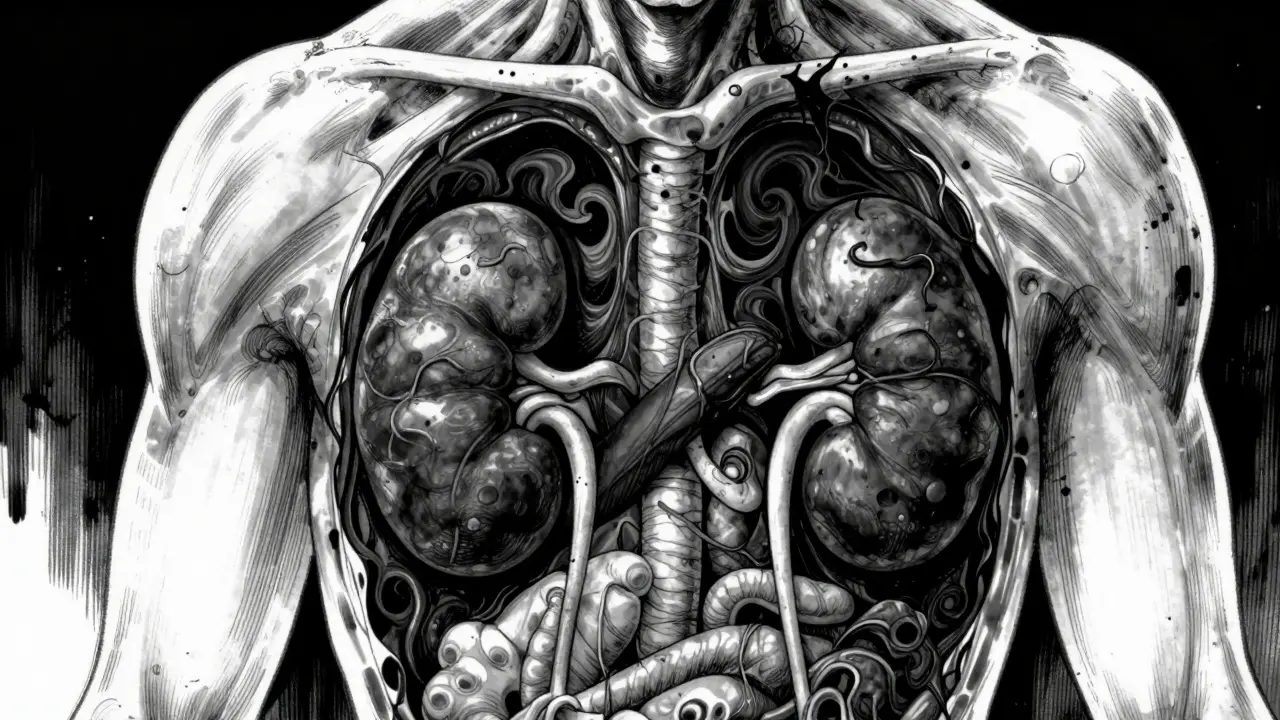
Imagine your kidneys losing 90% of their ability to work. That is the reality of End-Stage Renal Disease (ESRD), the final stage of chronic kidney disease. At this point, the kidneys can no longer filter waste and excess fluids from your blood well enough to keep you alive on their own. It is a heavy diagnosis, but it is not a dead end. Modern medicine offers several paths forward-mainly dialysis and transplantation-that can significantly extend life and improve how that life feels day-to-day.
Key Takeaways
- ESRD is defined by a GFR below 15 mL/min/1.73 m².
- Kidney transplantation generally offers the best survival rates and quality of life.
- Dialysis is a life-sustaining treatment but comes with significant time and dietary constraints.
- Early referral for transplant evaluation (when GFR drops below 30) is critical for better outcomes.
What Actually Happens in End-Stage Renal Disease?
When we talk about ESRD, we are describing a state where the kidneys have essentially retired. The most common culprits are Diabetes Mellitus, which causes nearly 44% of new cases, and Hypertension, responsible for about 28%. Other causes include autoimmune conditions like lupus nephritis or genetic issues like polycystic kidney disease.
Without intervention, the body builds up toxins and fluid, leading to a fatal condition. To prevent this, patients need Renal Replacement Therapy (RRT). This isn't a cure, but a way to do the kidneys' job using a machine or a donor organ. The goal is to keep blood chemistry stable-specifically keeping phosphate between 3.5 and 5.5 mg/dL and managing parathyroid hormone levels-to prevent bone disease and heart complications.
Navigating the Dialysis Options
Dialysis is the most common immediate response to kidney failure. It isn't a one-size-fits-all process; you generally have three main paths depending on your lifestyle and medical needs.
In-Center Hemodialysis This is the traditional route. You go to a clinic usually three times a week for 3-4 hours per session. A machine pumps your blood through a filter to clean it. While effective, it's a massive time commitment-up to 16 hours a week when you factor in travel. To make this work, surgeons usually create an Arteriovenous Fistula, which is a surgically joined artery and vein in your arm. This needs to be done 6-12 months before you start dialysis so it has time to "mature" and handle the blood flow.
Peritoneal Dialysis This happens inside your own body. A catheter is placed in your abdomen, and the lining of your belly (the peritoneum) acts as the filter. You can do this daily at home, either manually (CAPD) with four exchanges a day or using a machine at night (APD). Many people prefer this because it's less disruptive to a work schedule and generally offers a slightly better quality of life than center-based hemodialysis.
Home Hemodialysis This is becoming more popular, growing from about 8% of new patients in 2015 to over 14% by 2022. It gives you more control and often allows for more frequent, shorter sessions, which can be easier on the heart.
| Feature | Hemodialysis (Center) | Peritoneal Dialysis | Kidney Transplant |
|---|---|---|---|
| Weekly Time Commitment | 12-16 hours | Daily (at home) | Minimal (meds only) |
| Dietary Restrictions | Strict (Fluid/Potassium) | Moderate | Fewest Restrictions |
| 5-Year Survival Rate | ~35% | Intermediate | ~83-90% |
| Primary Risk | Infection/Blood Pressure | Peritonitis | Organ Rejection |
The Gold Standard: Kidney Transplantation
If you are a candidate, a Kidney Transplant is almost always the preferred choice. Why? Because it doesn't just replace the function of the kidney; it gives you your life back. Data shows a 68% lower risk of death compared to dialysis, and transplant recipients experience about 50% fewer hospitalizations every year.
There are two main types of donors: living and deceased. Living donor transplants have the best outcomes, with a 1-year graft survival rate of 95.5%. Deceased donor transplants are slightly lower but still vastly superior to dialysis. A huge advantage for those who get a "preemptive" transplant-meaning they get the organ before they ever need to start dialysis-is a significantly higher long-term survival rate.
However, it isn't for everyone. Doctors may advise against it if you have severe heart disease (ejection fraction below 25%), active cancer, or advanced dementia. Age can be a factor, but many people over 75 still receive transplants if they are otherwise healthy.
The Trade-Off: Quality of Life and Daily Reality
The difference in daily experience between these treatments is stark. If we look at the Kidney Disease Quality of Life (KDQOL-36) survey, transplant recipients score around 82.4 out of 100. In contrast, hemodialysis patients often score around 53.7. That gap represents the freedom to travel, eat a wider variety of foods, and avoid the "washout" feeling that often follows a dialysis session.
But a transplant isn't a "set it and forget it" solution. To keep the new organ from being attacked by the immune system, you must take Immunosuppressants for the rest of your life. Common drugs include tacrolimus or mycophenolate mofetil. These medications are expensive-often $1,500 to $2,500 a month-and they leave you more vulnerable to infections. You trade the exhaustion of dialysis for the vigilance of medication management.
Breaking Through the Barriers to Care
Not everyone gets equal access to these life-saving options. For a long time, there have been significant racial disparities in who gets referred for transplants. The RaDIANT Community Study highlighted that African American patients were referred to transplant centers far less often than white patients, even with the same medical needs. Through educational interventions and better provider training, these gaps are slowly closing, but it remains a critical issue in renal care.
Another hurdle is the waiting list. In the US alone, over 90,000 people are waiting for a kidney, and about 3,000 new names are added every month. This is why early action is so important. Medical experts suggest seeking a transplant evaluation as soon as your GFR falls below 30. If you wait until you are already in kidney failure, you've missed a window to avoid dialysis entirely.
How do I know if I have End-Stage Renal Disease?
ESRD is typically diagnosed when your Glomerular Filtration Rate (GFR) drops below 15 mL/min/1.73 m². This means your kidneys have lost about 90% of their function. Symptoms often include extreme fatigue, swelling in the legs (edema), and a buildup of waste in the blood called uremia.
Is a kidney transplant a permanent cure?
It is a treatment, not a cure. While it restores kidney function and greatly improves quality of life, the transplanted organ can eventually fail. Additionally, you must take immunosuppressant drugs forever to prevent the body from rejecting the organ.
What are the biggest risks of dialysis?
Hemodialysis carries risks of infection at the access site, sudden drops in blood pressure, and muscle cramps. Peritoneal dialysis carries a risk of peritonitis, an infection of the abdominal lining. Both require strict hygiene and monitoring.
Can I ever stop dialysis after a transplant?
Yes. Once a transplant is successful and the new kidney begins filtering blood, dialysis is no longer necessary. This is the primary goal of transplantation.
When should I be referred for a transplant evaluation?
Standard medical guidelines suggest a referral when your estimated GFR falls below 30 mL/min. Doing this early allows you to complete the psychosocial and medical evaluations required to get on the waiting list before your kidneys fail completely.
Next Steps and Troubleshooting
If you or a loved one are facing an ESRD diagnosis, the first step is a clear conversation with a nephrologist about your "trajectory." Ask specifically about your current GFR and whether you are eligible for a preemptive transplant. If you are heading toward dialysis, don't wait until the last minute to discuss fistula creation; getting that surgery early prevents the need for a temporary catheter, which carries a higher infection risk.
For those already on dialysis, consider if a home-based option like peritoneal dialysis fits your lifestyle better. If you're struggling with the strict diet, talk to a renal dietitian. Small adjustments in potassium and phosphate intake can prevent emergency hospital visits and make the dialysis process much easier on your body.

Harrison Duncombe
I have been working in the pharmaceuticals industry for over two decades and have developed a passion for medications and their impact on health. I enjoy researching new treatments and writing about their effects on diseases. Sharing my knowledge about supplements is something I find fulfilling. Through my work, I aim to provide valuable insights and guidance to those seeking understanding in this complex field.