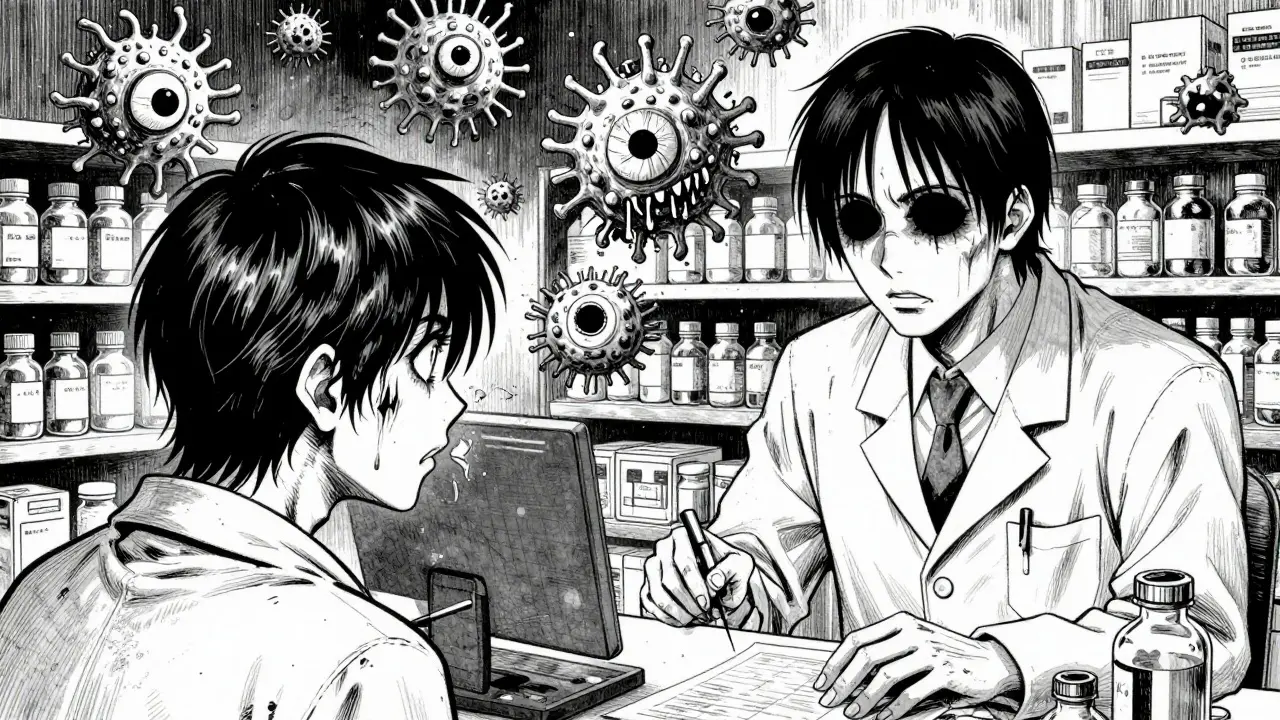
Imagine walking into a pharmacy for a simple throat infection, only to be told that the standard medicine no longer works. This isn't a plot from a sci-fi movie; it's a growing reality. We've spent decades treating antibiotics like candy, prescribing them for viral colds they can't even touch and pumping them into livestock to speed up growth. Now, the bacteria are fighting back, and we're running out of weapons.
The core of the problem is antibiotic overuse is the excessive or inappropriate use of antimicrobial drugs, which accelerates the evolution of drug-resistant bacteria. When we use these drugs too often or incorrectly, we don't kill all the bacteria; we only kill the weak ones. The survivors-the "superbugs"-learn how to defeat the medicine and multiply. This creates a dangerous cycle where common infections become life-threatening and routine surgeries become high-risk gambles.
The Silent Pandemic: What is Antimicrobial Resistance?
You've likely heard the term Antimicrobial Resistance (or AMR), but it's more than just a medical buzzword. It is a biological arms race. Bacteria are incredibly adaptable. When exposed to antibiotics, they develop mechanisms-like pumping the drug out of their cells or changing their outer structure-to make the medication useless.
The scale of this is staggering. According to the World Health Organization (WHO), one in six laboratory-confirmed bacterial infections worldwide were resistant to standard treatments in 2023. We are seeing a "silent pandemic" where bacterial AMR was directly responsible for 1.27 million deaths in 2019 alone. If we don't change how we use these drugs, some experts project that deaths from AMR could surpass cancer deaths by 2050.
This isn't just about one type of bug. Resistance is climbing across a variety of dangerous pathogens. For example, Escherichia coli (E. coli) and Staphylococcus aureus are showing alarming resistance rates. In some regions, 1 in 3 infections are now resistant to the drugs meant to cure them. When first-line treatments fail, doctors are forced to use "last-resort" drugs, like carbapenems, which are often more toxic and have harsher side effects. The terrifying part? Even these last-line defenses are starting to fail.
The Gut Connection: How Antibiotics Trigger C. difficile
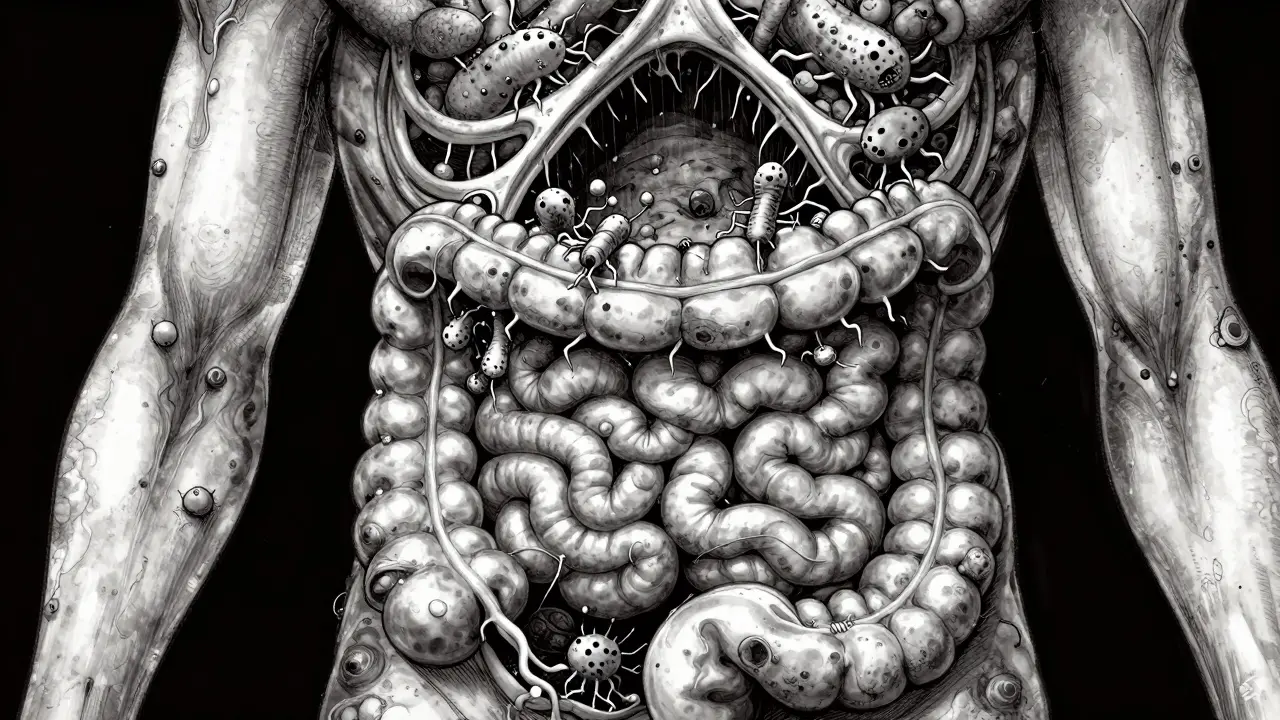
While the world worries about superbugs in hospitals, there is another risk hiding in our own digestive tracts. Your gut is home to trillions of beneficial bacteria that keep you healthy and crowd out "bad" bacteria. When you take a broad-spectrum antibiotic, the drug doesn't just target the infection in your lungs or skin-it wipes out the good bacteria in your gut too.
This creates a biological vacuum. When the natural flora is gone, Clostridioides difficile (commonly known as C. difficile or C. diff) is an opportunistic bacterium that causes severe diarrhea and colitis by producing toxins in the colon after the gut microbiome is disrupted. Because there are no "good" bacteria left to stop it, C. diff proliferates rapidly.
C. diff isn't just a stomach ache; it's a serious medical condition that can lead to severe inflammation of the colon and, in some cases, death. It is most common in healthcare settings where antibiotic use is high, making it a primary example of how the cure can sometimes create a new, dangerous problem.
Comparing the Risks: AMR vs. C. difficile
It is easy to confuse the two, but they represent different types of risks associated with medication misuse. One is about the bacteria evolving to ignore the drug, while the other is about the drug destroying our natural defenses.
| Feature | Antimicrobial Resistance (AMR) | C. difficile Infection |
|---|---|---|
| Core Problem | Bacteria evolve to survive the drug | Drug kills good bacteria, allowing C. diff to grow |
| Primary Cause | Overuse and misuse of antibiotics | Disruption of gut microbiome |
| Effect | Treatment fails; infection persists | Severe diarrhea and colon inflammation |
| Scope | Global systemic threat to all medicine | Patient-specific opportunistic infection |
Why the Pipeline is Drying Up
You might wonder: why don't we just invent new antibiotics? The answer is money. Developing a new drug is incredibly expensive, but antibiotics are a poor investment for pharmaceutical companies. Unlike a pill for blood pressure or cholesterol that a patient takes every day for 30 years, an antibiotic is taken for a week and then stopped. Furthermore, the most effective new antibiotics are kept "on the shelf" as a last resort, meaning they aren't sold in high volumes.
Public-private partnerships like CARB-X are trying to bridge this gap by funding early-stage research, but the pace of bacterial evolution is simply faster than our current economic model for drug development. We are essentially fighting a high-tech war with outdated equipment.

Taking Action: What You Can Do
We can't stop bacterial evolution, but we can slow it down. The most important tool we have is Antibiotic Stewardship, which is the practice of ensuring the right drug is used at the right dose for the right amount of time.
If you're a patient, the first step is to stop demanding antibiotics for viral infections. Colds, the flu, and most sore throats are caused by viruses, and antibiotics do absolutely nothing to kill them. Taking them anyway doesn't make you get better faster; it only puts you at risk for C. diff and helps create the next superbug.
If you are prescribed antibiotics for a legitimate bacterial infection, follow these rules to minimize risk:
- Finish the entire course: Even if you feel better after three days, some bacteria are still alive. If you stop early, the surviving bacteria can evolve resistance.
- Never share medications: Using an antibiotic prescribed for someone else is dangerous and often leads to the wrong drug being used for the wrong bug.
- Ask about probiotics: While not a cure, discussing gut health with your doctor may help mitigate some of the microbiome damage caused by the medication.
- Practice basic hygiene: Washing your hands is the simplest way to prevent the spread of resistant strains like MRSA.
The Future of Medicine at Stake
If we continue on this path, we risk returning to the "pre-antibiotic era." Imagine a world where a simple scratch from a rose thorn or a routine hip replacement becomes a life-threatening event because we can no longer prevent secondary infections. This isn't a distant fear; it's a projection based on current data. The 2025 WHO reports show that resistance is increasing by 5-15% annually in many monitored combinations.
The goal isn't to stop using antibiotics entirely-they are miracles of modern medicine. The goal is to use them with respect. By treating these drugs as a precious, finite resource rather than a disposable commodity, we can preserve their power for the people who truly need them.
Can I get C. diff if I only take antibiotics once?
While unlikely from a single dose, the risk increases with the duration and strength of the antibiotic. Broad-spectrum antibiotics, which kill a wide variety of bacteria, are the biggest culprits. People with weakened immune systems or those in hospital settings are at a much higher risk.
Does taking probiotics prevent antibiotic resistance?
Probiotics don't prevent the bacteria from evolving resistance to the drug itself. However, they may help protect your gut flora, which can potentially reduce the risk of a C. difficile infection by keeping the "bad" bacteria from taking over your colon.
Why are some antibiotics called "last-resort"?
Last-resort antibiotics, such as certain carbapenems, are used only when all other treatment options have failed. They are kept in reserve to ensure that if a patient has a highly resistant infection, there is still one final weapon available that the bacteria haven't learned to defeat yet.
Is antibiotic resistance a global problem or just in hospitals?
It's a global crisis. While hospitals are "hotspots" for superbugs, resistance also develops in the community due to inappropriate prescribing and in industrial farming, where antibiotics are often used to promote growth in animals, allowing resistant strains to enter the food chain.
What happens if my infection is resistant to all known antibiotics?
This is a critical clinical challenge. Doctors may try combination therapies (using multiple drugs together), look for experimental treatments through clinical trials, or use bacteriophage therapy (using viruses that eat bacteria), though these are not yet standard in all healthcare systems.

Harrison Duncombe
I have been working in the pharmaceuticals industry for over two decades and have developed a passion for medications and their impact on health. I enjoy researching new treatments and writing about their effects on diseases. Sharing my knowledge about supplements is something I find fulfilling. Through my work, I aim to provide valuable insights and guidance to those seeking understanding in this complex field.