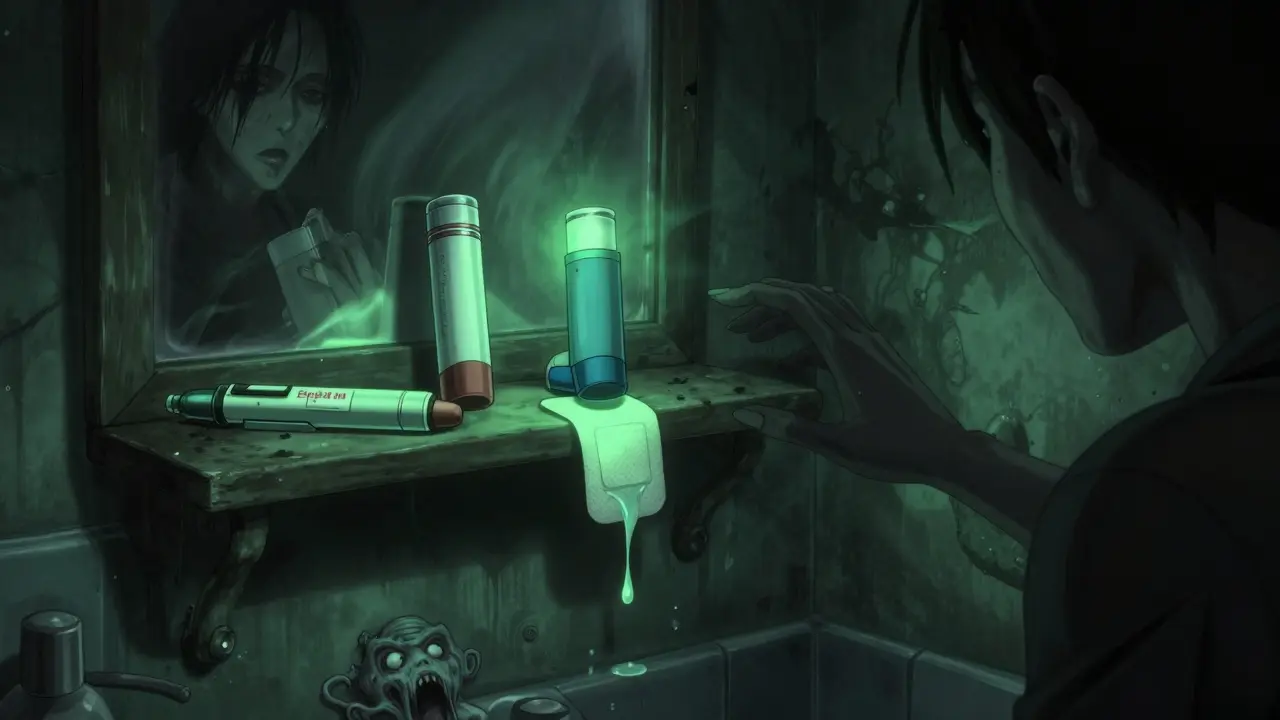
Getting rid of expired EpiPens, inhalers, and medicated patches isn’t as simple as tossing them in the trash. These aren’t just old pills or empty bottles-they contain powerful drugs, sharp needles, pressurized chemicals, and sticky residues that can harm kids, pets, sanitation workers, and even rivers if handled wrong. In 2022, the FDA reported that 12% of accidental poisonings in children involved improperly thrown-away medications. That’s not a small number. And with millions of these devices used every year, knowing how to dispose of them correctly isn’t optional-it’s a safety must.
Why You Can’t Just Throw Them Away
EpiPens aren’t plastic pens. They’re medical devices with a hidden needle that fires epinephrine during an allergic emergency. Even if they’re empty, that needle is still sharp. If someone stumbles across one in a regular trash bin-like a janitor, a kid rummaging through a backpack, or a dog chewing on garbage-they could get stuck. That’s not just a scare tactic. Emergency rooms see cases like this every year. Inhalers are worse. Most of them are pressurized canisters filled with gas propellants like hydrofluoroalkanes (HFAs). If you throw one in the trash and it gets crushed in a compactor, it can explode. If you toss it in a fire or recycling bin, it releases greenhouse gases that contribute to climate change. The American College of Allergy, Asthma, and Immunology says over 300 million inhalers are thrown away in the U.S. every year. A lot of them end up in landfills or incinerators. Medicated patches? They’re sticky. And that stickiness isn’t just for your skin-it’s for the drug. Even after you peel one off, up to 50% of the medication can still be stuck to the adhesive. If you fold it loosely and toss it in the trash, someone could pick it up, stick it on their skin, and overdose. Fentanyl patches, for example, can be deadly if handled carelessly.How to Dispose of Expired EpiPens
The safest way to get rid of an expired or used EpiPen? Take it back. Most allergists, clinics, and hospitals have sharps disposal bins just for this. When you go in for your refill, ask if they’ll take the old one. Many do-no questions asked. One Reddit user shared, "My allergist’s office has a sharps bin specifically for expired EpiPens-they took mine no questions asked." That’s the gold standard. If your doctor’s office doesn’t take them, check for a DEA-authorized drug take-back location. These are often at pharmacies, police stations, or hospitals. Use the DEA National Take Back Initiative website to find the closest one. You can search by zip code and see which locations accept auto-injectors. If you absolutely can’t get to a drop-off site right away, store it safely at home. Put the EpiPen in a rigid, puncture-proof container-like a plastic laundry detergent bottle with a tight lid. Label it clearly: "SHARPS," "BIOHAZARD," and "DO NOT RECYCLE." Keep it out of reach of children and pets. Never try to take apart an EpiPen. Removing the battery or breaking the casing is dangerous and unnecessary. The FDA and AAAAI both warn against tampering. State rules vary. In California, you must use a certified sharps disposal program or mail-back service. In Texas, you can throw it in the trash if it’s in a labeled, sealed container. Check your state’s health department website for specifics.How to Dispose of Inhalers
Inhalers are trickier because they’re both a medical device and an aerosol. You can’t recycle them like a soda can. You can’t burn them. And you definitely can’t throw them in the regular trash without precautions. First, check the label. Some inhalers say "Do not puncture or incinerate." That’s your first clue. The FDA recommends contacting your local trash or recycling service to ask how they handle aerosols. Some cities have special drop-off sites. New York City, for example, accepts aerosol inhalers at Household Special Waste Drop-Off Sites. Some pharmacies offer take-back programs. Walgreens accepts inhalers at select locations, but only 47% of their stores do so as of 2022. CVS doesn’t take them at all. Don’t assume your local pharmacy will help-call ahead. If there’s no local option, the safest home method is to remove the canister from the plastic holder. The plastic mouthpiece can usually go in recycling if it’s clean. The metal canister? Tape the valve shut with duct tape, put it in a sealed plastic bag, and label it "Aerosol - Do Not Crush." Then put it in the trash. It’s not ideal, but it’s better than letting it explode in a truck.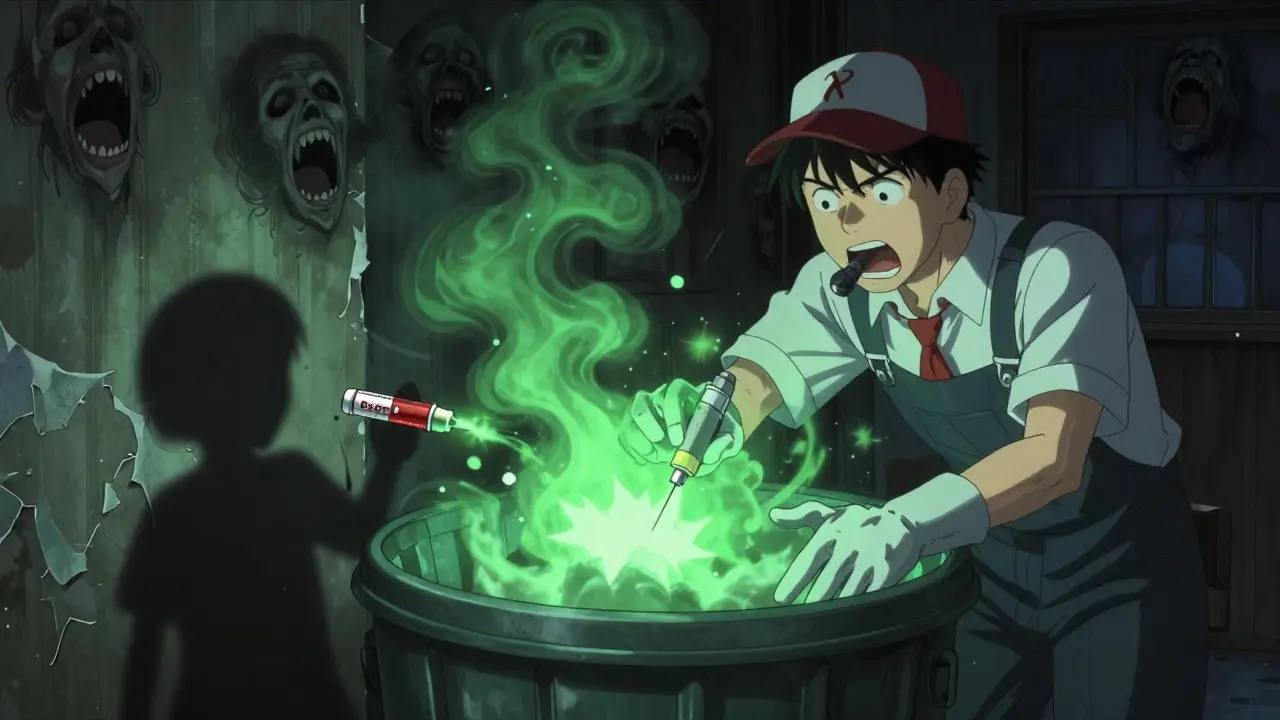
How to Dispose of Medicated Patches
Patches are the most dangerous if handled wrong. The drug doesn’t disappear when you peel it off. It stays on the sticky side. That’s why the FDA has a "flush list"-medications so dangerous they should go straight down the toilet if you can’t get to a take-back site. Fentanyl patches are on that list. So are some opioid patches. If your patch is on the FDA flush list, fold it in half so the sticky sides stick together, then flush it. Yes, flush it. That’s the recommendation from Nationwide Children’s Hospital and the DEA. It sounds weird, but it’s the fastest way to remove a lethal dose from your home. If it’s not on the flush list (like a nicotine patch or a pain patch that’s not fentanyl), fold it in half, sticky side to sticky side, and put it in a sealed container. Add something unappetizing-coffee grounds, cat litter, or dirt-to make it less tempting. Then throw it in the trash. Never leave it loose. There’s a product called DisposeRx® that turns pills into gel to prevent misuse. But it doesn’t work on patches. The adhesive doesn’t dissolve. So don’t waste your money if you’re only dealing with patches.Use Take-Back Programs Whenever Possible
The best option for all three? Take-back programs. Twice a year, the DEA runs National Prescription Drug Take Back Days. In October 2022 alone, they collected nearly a million pounds of medication across 5,800 locations. That’s not a drop in the bucket-it’s a flood of safe disposal. These events are usually held at police stations, pharmacies, or community centers. You don’t need to be a patient. You don’t need a receipt. Just bring the expired meds. No questions asked. Many people don’t even know these exist. A 2023 Consumer Reports survey found only 28% of users knew about them. If you live in a rural area, this might be harder. A 2022 study in the Journal of Rural Health found only 37% of rural counties had permanent disposal sites, compared to 89% of urban ones. That’s a gap. But even in rural areas, mail-back programs are becoming more common. Some states now offer free prepaid mailers for sharps and medications.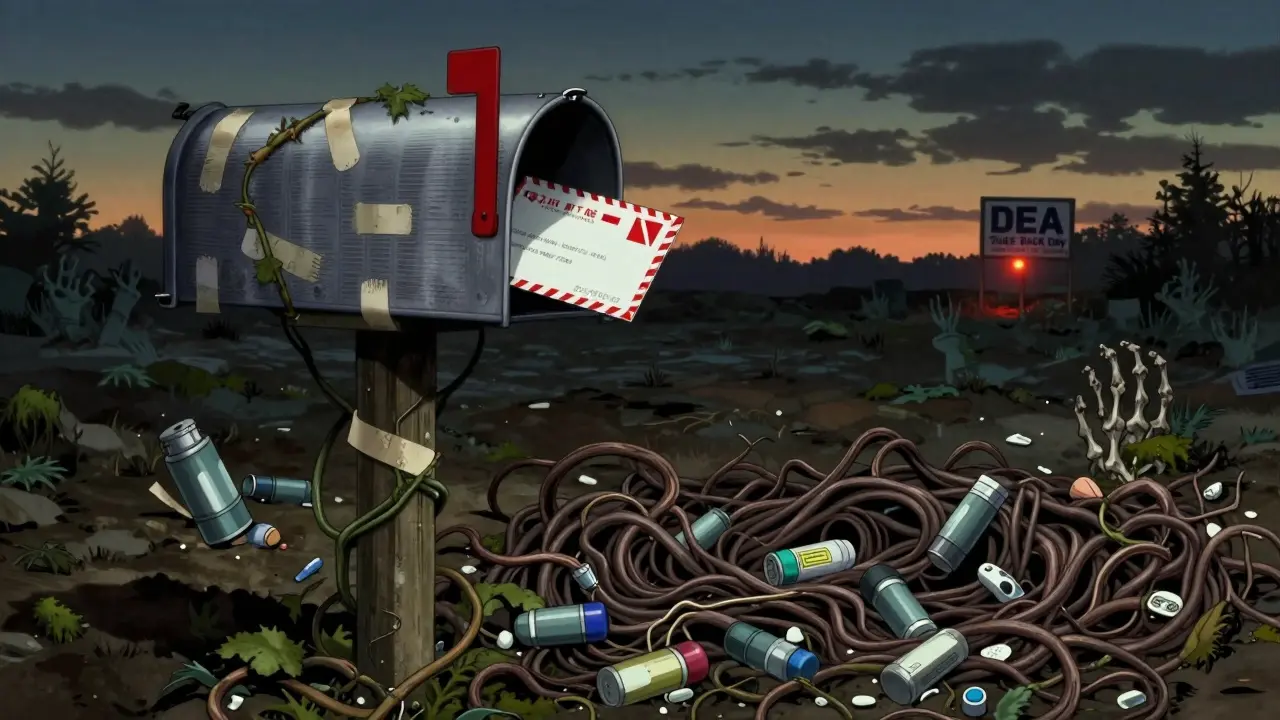
What to Do If You Can’t Find a Take-Back Site
You’re not alone. A Reddit user named u/AllergyMom123 said, "My CVS said they only take pills, not auto-injectors." That’s common. Pharmacies aren’t required to take back sharps or inhalers unless they’re part of a state program. In that case, follow these steps:- EpiPens: Use a puncture-proof container. Label it. Store it safely. Get to a take-back site as soon as possible.
- Inhalers: Tape the valve shut. Put the canister in a sealed bag. Label it. Trash it. Recycle the plastic if allowed locally.
- Patches: Fold sticky side to sticky side. Flush if it’s on the FDA flush list. Otherwise, mix with coffee grounds or cat litter, seal it, and trash it.
How to Stay Ahead of the Problem
The easiest way to avoid disposal headaches? Don’t let these things expire in the first place. - Check expiration dates every month. Set a phone reminder. EpiPens expire after 12-18 months. Inhalers often last a year. Patches vary. - Keep a dedicated container for expired meds. A small plastic box on your bathroom shelf works. Label it "Expired Meds - Do Not Use." - Ask your pharmacist or doctor about disposal options when you get a new prescription. Most will tell you where to return the old one. - Sign up for DEA Take Back Day alerts. They’re free. You can find them at dea.gov/takeback.What’s Changing in 2026
New rules are coming. California’s SB 212, which took effect in January 2024, requires drug makers to fund and run disposal programs. That means more mail-back kits, more drop-off bins, and more awareness. Mylan (the maker of EpiPens) started adding QR codes to packaging in late 2023 that link directly to disposal instructions. The EPA is also pushing new rules under the Resource Conservation and Recovery Act to treat pharmaceutical waste like hazardous material. That could mean stricter rules for pharmacies and hospitals-but also better access for regular people. The bottom line? Disposal is getting easier. But right now, you still have to be the one to take the first step.Can I recycle expired EpiPens or inhalers?
No. EpiPens contain a sharp needle and are classified as medical sharps-they can’t be recycled. Inhalers are pressurized aerosols and can explode in recycling trucks. Both must be disposed of through special programs, not curbside recycling.
Is it safe to flush patches down the toilet?
Only if they’re on the FDA’s flush list, which includes fentanyl and certain strong opioids. For other patches like nicotine or pain relief, folding them in half and throwing them in the trash with coffee grounds is safer and just as effective.
What if I can’t find a take-back location near me?
Use the DEA’s online locator at dea.gov/takeback. If none exist nearby, store sharps in a labeled, sealed container and wait for a mail-back program or regional collection event. Some states offer free prepaid mailers-check with your state health department.
Can I throw away an empty EpiPen in the regular trash?
No. Even if the medication is gone, the needle is still sharp. It must be treated as a medical sharp. Place it in a puncture-proof container and label it before disposal.
Why do some pharmacies refuse to take back EpiPens?
Many pharmacies only accept pills and liquids because handling sharps requires special training, containers, and disposal contracts. Not all have the infrastructure. Always call ahead before going in.
If you’ve been tossing expired meds in the trash because you didn’t know better, you’re not alone. But now you do. And that means you can protect your family, your community, and the environment. Start by checking your medicine cabinet today. Find one expired device. Call your pharmacy. Or visit dea.gov/takeback. One small step today can prevent a disaster tomorrow.

Arlen Whitlock
My name is Arlen Whitlock, and I am an expert in the field of pharmaceuticals. With a deep passion for understanding medications and their effects on various diseases, I have dedicated my life to researching and developing innovative drug therapies. I also have a keen interest in dietary supplements and their potential interactions with medication. Sharing my knowledge and insights with others is one of my greatest passions, and I fulfill this by writing about the latest advancements in medication, the treatment of various diseases, and the role of supplements in health. Through my work, I hope to contribute to the betterment of public health and the well-being of patients around the world.
Just tossed my expired EpiPen today and thought I was doing fine until I read this 😅 Took it to my pharmacy and they were like 'we don't take those'... so I stuck it in an old peanut butter jar with duct tape on top. Feels weird but safer than risking my toddler finding it. Thanks for the reminder!
The systemic failure here is not just about individual negligence-it's about the commodification of healthcare infrastructure. Pharmaceutical corporations profit from the sale of life-saving devices while externalizing the burden of safe disposal onto the public, often without providing adequate infrastructure. The fact that only 28% of users know about Take Back Days is not an accident; it's a feature of a system designed to maximize profit and minimize liability. The FDA’s 'flush list' is a grotesque compromise: we are told to poison our waterways rather than invest in centralized, regulated disposal networks. This is not public health-it's corporate evasion dressed in public service rhetoric.
Mate, you’re telling me inhalers are aerosols but we can’t recycle them? That’s like saying a Tesla battery is recyclable but then dumping it in a landfill because 'it’s complicated'. The HFA propellants are potent greenhouse gases-like 1,000x worse than CO2-and we’re just taping them shut and chucking them in the bin? 😳 We need a circular economy for inhalers, not this slapdash 'tape and hope' policy. Pharma companies should be legally obligated to fund take-back kiosks. End of story.
I live in rural Oregon and there’s literally no take-back site within 60 miles. I started using the mail-back kit from my state’s health dept-it’s free, pre-paid, and comes with a sharps container. I didn’t even know it existed until last year. If you’re struggling, DM me-I’ll send you the link. We’re all just trying to do the right thing without getting fined or poisoned. 💙
It is with profound respect for public health and environmental stewardship that I commend the comprehensive nature of this exposition. The delineation of disposal protocols for EpiPens, inhalers, and medicated patches represents not merely procedural guidance, but a moral imperative. I shall ensure that my household adheres strictly to the outlined protocols, and I intend to distribute this information to my local community center for dissemination. Thank you for your diligence.
so like... i just threw my patches in the trash like a total idiot 😭 i didnt even fold them. i mean i thought they were 'empty' after i peeled em off. now im paranoid my dog got into it. should i go to the er? also why is there no app for this??
I’ve been using the mail-back service from my local hospital here in Dublin. It’s free, discreet, and they even send you a pre-labeled envelope. Took me 3 minutes to drop mine in the mailbox. No drama. No guilt. Just done. If you’re in Europe, check with your national health service-they’re often ahead of the US on this.
WHY ISN’T THIS MANDATORY? WHY ARE PHARMACIES ALLOWED TO REFUSE? THIS IS A PUBLIC HEALTH CRISIS AND WE’RE TALKING ABOUT 'TAPE THE VALVE SHUT' LIKE WE’RE FIXING A LEAKY SINK? THEY’RE SUPPOSED TO BE LIFE-SAVING DEVICES-NOT TRASH THAT WE’RE HANDLING LIKE A DANGEROUS GAME OF CHINESE WHISPERS. SOMEONE NEEDS TO GET FIRED. OR LAWSUITED. OR BOTH.
I used to flush my fentanyl patches because I read it was safe... then I saw a video of a kid finding one in a park and almost died. I haven’t slept since. I now keep them in a locked box labeled 'DO NOT TOUCH' like they’re nuclear waste. My therapist says I’m being dramatic. I say: you try not to be terrified when your child asks what's in the 'magic box'.
in india we just throw them away but now i feel bad 😅 my mom used to reuse old patches on her knee pain... i told her no way and she said 'but it still works'... i showed her this article and now she's helping me collect all expired meds. we're starting a community drop box in our housing society. small steps, right?
I’ve been collecting expired EpiPens in a shoebox under my bed for 18 months because I didn’t know what to do. I thought maybe I’d just bury them in the backyard. I even Googled 'can I compost a needle'-I’m not joking. Then I found this. I drove 40 miles to the police station today. They took it. They didn’t even ask why I waited. I cried. Not because I’m weak. Because for once, someone didn’t make me feel like a bad parent for not knowing.
you people are so dramatic. i just throw everything in the trash. i mean, come on. it’s not like anyone’s gonna get hurt. if they do, then maybe they shouldn’t be digging through garbage. #commonSense
so wait-can you recycle the plastic part of an inhaler? like the mouthpiece? i tried to clean it off and put it in recycling but my bin guy threw it back. he said 'aerosol residue'... is that a real thing? or is he just weird?