
Bringing your pill bottles to a doctor’s appointment isn’t just a good idea-it’s one of the most effective ways to prevent dangerous medication errors. Every year, tens of thousands of hospital visits and emergency trips are caused by mistakes in what patients are actually taking versus what’s documented in their medical records. The fix is simple: bring your bottles. Not a list. Not a photo. The real bottles with the original labels still on them.
Why Pill Bottles Matter More Than Any List
Medication reconciliation is a formal process used by doctors and pharmacists to make sure they have the full, correct picture of every drug you’re taking. It’s not just about prescriptions. It includes over-the-counter pills, vitamins, herbal supplements, and even medications you stopped taking but still have in your medicine cabinet. The Joint Commission made this a national safety goal back in 2006, and for good reason. Research shows that 60-70% of medication errors happen during transitions in care-like when you switch doctors, get discharged from the hospital, or start a new treatment. A 2024 study published by the American Academy of Family Physicians found that when patients bring their actual pill bottles, medication discrepancies drop by 67%. That means fewer bad reactions, fewer hospital stays, and less risk of something like a dangerous drug interaction slipping through the cracks. One nurse in a Reddit thread reported catching three life-threatening interactions in just one month because a patient brought their bottles. Without those bottles, those drugs would’ve never shown up in the chart.What to Bring: Everything, Even the “Unused” Ones
Don’t leave anything behind. Not even the bottle that’s almost empty. Not even the one you stopped taking last year. Not even the gummy vitamins you only take when you feel tired. Here’s the full list:- All prescription medications in their original containers
- All over-the-counter pills (pain relievers, sleep aids, antacids)
- All vitamins, minerals, and supplements
- All herbal remedies and CBD products
- Any medications you’ve stopped taking but still have at home
Why Pill Organizers Won’t Cut It
Many people dump their pills into weekly or monthly organizers to make life easier. It’s practical. It looks neat. But it’s a nightmare for reconciliation. A 2023 study showed that 38% of patients consolidate multiple medications into single containers. That means a little plastic box with 12 pills inside could contain anything: a blood pressure pill, a cholesterol drug, an antidepressant, and a daily aspirin-all mixed together. No labels. No dosages. No expiration dates. No way for your doctor to know what’s in there. Even worse, if you’re using a two-week organizer or a fancy smart dispenser, your doctor has no way to verify what you’re actually taking. A 2024 review in the Journal of the American Board of Family Medicine found that patients who rely on organizers miss 45% of their own medications during self-reporting. That’s not just forgetfulness-it’s a blind spot in your care.The Brown Bag Method: A Simple System That Works
The best way to prepare is called the “brown bag review.” It’s exactly what it sounds like: put every single pill, capsule, and bottle into one brown paper bag the night before your appointment. No sorting. No labeling. Just gather everything and bring it as-is. Practices that use this method report 38% less time spent on medication review during visits. Why? Because the doctor doesn’t have to ask, “What’s this?” or “Did you take that last week?” They can just look at the labels. It’s faster. It’s more accurate. And it reduces stress-for both you and the provider. If you’re worried about looking messy or overwhelming the office, remember: this isn’t about appearances. It’s about safety. A 2023 survey found that 28% of patients felt ashamed to bring their bottles because they had too many unused pills. But that shame is exactly why doctors need to see them. If you’re still taking a drug you were told to stop, your doctor needs to know. If you’re not taking something you’re supposed to, they need to know that too.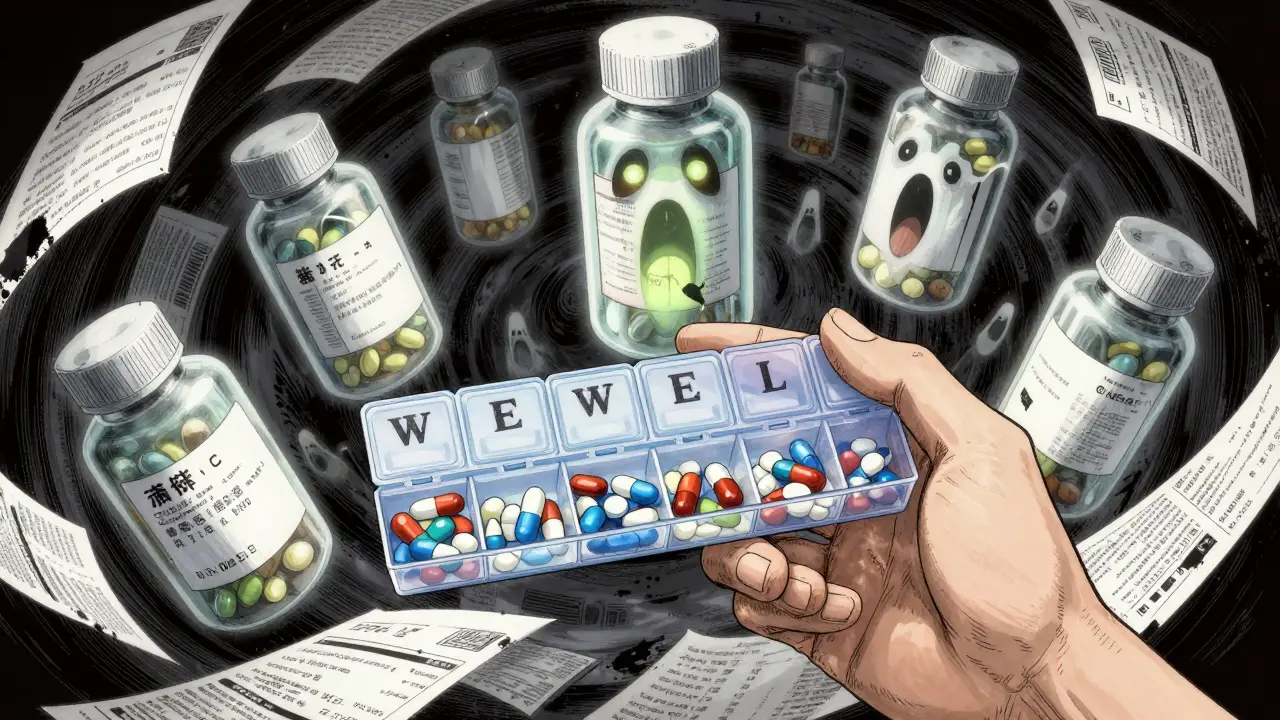
What to Do If You’ve Already Thrown Away the Labels
It happens. You empty a bottle, toss it, and later realize you need to remember what was in it. Don’t panic. Here’s what to do:- Take photos of every bottle before you throw it away. Keep them in a folder on your phone labeled “Medications.”
- Use apps like Medisafe, MyTherapy, or PillPack. They sync with your pharmacy and create digital lists you can print or show on your phone.
- Call your pharmacy the day before your appointment. They can print out your complete fill history-including over-the-counter meds they’ve sold you.
What to Expect During the Appointment
When you walk in with your bag, your provider will likely sit down with you and go through each bottle one by one. They’ll check:- Drug name and strength (e.g., “Lisinopril 10 mg”)
- How often you take it (daily, twice a day, as needed)
- Why you’re taking it (for blood pressure, for pain, for sleep)
- When you last took it
- Whether you’ve stopped any
What About Telehealth Visits?
If you’re seeing your doctor remotely, you might think showing your pills on camera is enough. It’s better than nothing-but not enough. A 2024 study from the American Medical Association found that virtual pill checks miss 22% of discrepancies that in-person visits catch. Why? Because cameras can’t show:- Pills mixed in a container
- Expired or discolored pills
- Empty bottles you’re still keeping
- Supplements you’re hiding because you think they’re “not real medicine”
Why This Isn’t Just for Seniors
You might think this only matters if you’re older and on a lot of meds. But that’s not true. Even if you’re young and only take one prescription, you could still be taking supplements, painkillers, or OTC drugs that interact badly. A 2023 study showed that 47% of adults over 65 take five or more medications, but 28% of adults under 50 take three or more-including vitamins, sleep aids, and NSAIDs. The problem isn’t age. It’s complexity. If you’re on more than three medications, you’re at higher risk. And if you’ve seen multiple doctors recently, the chance of a mismatch skyrockets.
What’s Changing in 2026
Technology is helping-but not replacing-the human process. By 2026, federal rules will require pharmacies and EHR systems to share medication data automatically using FHIR APIs. That means your doctor might soon see your fill history without you lifting a finger. But even with that, experts agree: the physical bottle is still the gold standard. Dr. Michael A. Steinman, co-author of the 2023 Beers Criteria, called it the “Rosetta Stone of medication reconciliation.” No app, no database, no AI tool can match the detail on an FDA-approved pill label: lot number, expiration date, prescribing doctor, pharmacy info, and exact dosage. The future is digital. But the present still needs your brown bag.Quick Checklist Before Your Appointment
- ☐ Gather all prescription bottles (even empty ones)
- ☐ Include all OTC meds, vitamins, and supplements
- ☐ Bring anything you’ve stopped taking
- ☐ Don’t transfer pills to organizers for this visit
- ☐ Take photos of labels if you’ve thrown bottles away
- ☐ Call your pharmacy for a printed list as backup
- ☐ Put everything in one bag-no sorting needed
What If Your Doctor Doesn’t Ask for Them?
Some providers still don’t routinely request pill bottles. Don’t wait for them to ask. Say it yourself: “I’ve brought all my medications in case we need to reconcile them.” Most doctors will be grateful. A 2024 survey found that 73% of primary care physicians wish more patients brought their bottles. If your doctor dismisses it, politely insist. Your safety matters more than their routine. If they still won’t review them, ask to speak with a pharmacist or request a medication therapy management session through your insurance.Final Thought: This Isn’t a Chore. It’s a Lifesaver.
Bringing your pill bottles takes 15 minutes. It might feel awkward. It might look messy. But it’s the single most effective thing you can do to keep yourself safe. Medication errors kill more people each year than car accidents. You don’t need to be perfect. You just need to be honest. And your bottles? They never lie.Do I need to bring every pill bottle, even if I haven’t used it in months?
Yes. Even if you stopped taking a medication weeks or months ago, keep the bottle. Doctors need to know what you’ve taken in the past to spot interactions, side effects, or unnecessary prescriptions. A 2023 study found that 56% of harmful medications in older adults were only discovered by checking physical bottles-not patient recall.
Can I just show a list or a photo of my meds instead?
A list or photo helps, but it’s not enough. Self-reported lists miss up to 45% of medications. Photos can’t show expiration dates, lot numbers, or whether pills are mixed in a container. The original bottle has FDA-required labels with exact dosage, pharmacy info, and prescribing doctor-details apps and lists often get wrong.
What if I use a pill organizer? Should I bring that too?
Bring the organizer, but also bring the original bottles. Organizers hide what’s inside. Your doctor needs to see the labels to verify what you’re taking. If you’re using a weekly or monthly organizer, your provider will compare it to the original bottles to make sure you’re taking the right pills in the right doses.
Do I need to bring over-the-counter meds and supplements?
Yes. Over-the-counter drugs like ibuprofen, melatonin, or fish oil can interact with prescriptions. Many patients don’t think of them as “real medicine,” but they’re just as important. A 2024 study showed that 67% of medication discrepancies involved non-prescription items.
Is this only for older adults?
No. While older adults are more likely to take multiple medications, nearly 30% of adults under 50 take three or more drugs-including OTC meds, supplements, and prescriptions. Anyone on more than two medications should bring their bottles to avoid dangerous interactions.
What if I don’t know what some of my pills are for?
That’s okay. Bring them anyway. Your doctor or pharmacist can look up the labels and tell you what they’re for. Many patients don’t know why they’re taking certain meds-especially if they were prescribed years ago. The goal isn’t to judge you; it’s to make sure you’re safe.
Can I use a smart pill bottle with tracking?
Smart bottles can help you remember to take your meds, but they don’t replace original prescription bottles. They don’t show the full label info-like lot numbers, expiration dates, or prescribing doctor. For reconciliation, the FDA-approved label on the original bottle is still required. Use smart bottles as a tool, not a substitute.

Arlen Whitlock
My name is Arlen Whitlock, and I am an expert in the field of pharmaceuticals. With a deep passion for understanding medications and their effects on various diseases, I have dedicated my life to researching and developing innovative drug therapies. I also have a keen interest in dietary supplements and their potential interactions with medication. Sharing my knowledge and insights with others is one of my greatest passions, and I fulfill this by writing about the latest advancements in medication, the treatment of various diseases, and the role of supplements in health. Through my work, I hope to contribute to the betterment of public health and the well-being of patients around the world.
i brought my pills to my last appt and the nurse literally gasped. she said she'd never seen someone with so many empty bottles. i told her i still take the ghost meds in my head. she didn't laugh. now i'm scared they're tracking my thoughts. 👁️👄👁️
Ah, the sacred ritual of the brown bag. The modern-day oracle of pharmaceutical truth. We bow before the FDA-approved plastic, as if the label holds the divine code of existence. Meanwhile, your soul is being digitized into a blockchain of pill logs while you clutch your bottle like a rosary. The irony? The bottle doesn't lie-but neither does the system that made you need it in the first place.
The bottle is the truth. Everything else is noise.
I appreciate your philosophical framing... but let’s not forget: the bottle isn’t a religious relic-it’s a safety net. And if you’re too busy contemplating the metaphysics of medication to actually bring it? You’re not a thinker-you’re a risk. 🙏
I brought my pills and my therapist said I had too many and I cried for three days and now my doctor won't look me in the eye and I think they're all in on it the pharmaceutical companies and the doctors and the nurses they all want you dependent they want you hooked on the system and I'm not wrong I'm not wrong I'm not wrong
my grandma’s meds looked like a crime scene. 17 bottles, 3 expired Xanax, 2 gummy bears labeled ‘vitamin D’ that were clearly just candy, and one bottle that just said ‘MAGIC DUST’ in Sharpie. she said it was for ‘emotional balance.’ i called poison control. they laughed. i cried. i’m still not sure if she’s alive or just hallucinating from the cocktail.
i started doing the brown bag thing after my aunt almost died from mixing her blood pressure med with her fish oil. i didn't know that could kill you. now i bring everything. even the ones i forgot about. it's weird but it feels like i'm finally telling the truth
why are we treating pill bottles like holy relics? people forget what they take. so what? just update the chart. the system’s broken, not the patient. this is performative safety. it makes providers feel good, not you safer. also-why are we still using paper bags in 2026?
This is one of those things that sounds simple but changes everything. I used to think I was too young to need this. Then I realized I was taking 4 things-prescription, sleep aid, turmeric, and ibuprofen-and my doctor had no idea about two of them. Now I bring everything. It’s not about being perfect. It’s about not dying because someone missed a gummy bear.