Warfarin: What You Need to Know About This Blood Thinner and Its Interactions
When you take warfarin, a vitamin K antagonist used to prevent dangerous blood clots. Also known as Coumadin, it’s one of the most prescribed anticoagulants in the world—but it’s not simple. A single wrong interaction can lead to bleeding or clotting, and your body’s response changes based on diet, other drugs, and even your genetics. Unlike newer blood thinners, warfarin doesn’t have a fixed dose. Instead, it requires regular INR monitoring, a blood test that measures how long it takes your blood to clot to stay in the safe range. Too low, and you risk stroke or pulmonary embolism. Too high, and you could bleed internally from a minor bump.
Warfarin doesn’t work in isolation. It’s affected by dozens of other drugs and even foods. Rifampin, an antibiotic used for tuberculosis and other infections, can slash warfarin levels by triggering liver enzymes, making it useless. On the flip side, some antibiotics like clarithromycin, a common treatment for respiratory infections, can make warfarin too strong, pushing INR levels into dangerous territory. Even over-the-counter painkillers like ibuprofen or herbal supplements like ginkgo biloba can interfere. Your pharmacist isn’t just filling a script—they’re watching for these hidden clashes.
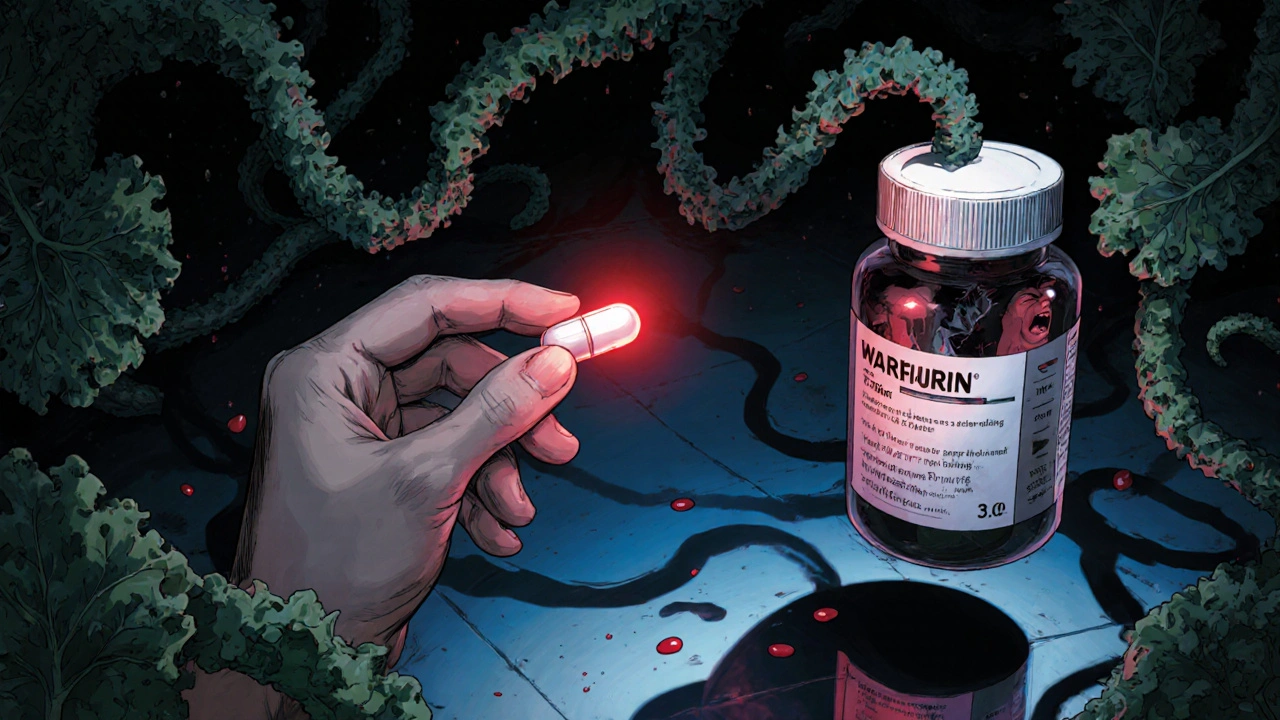
What makes warfarin so tricky is that it’s not just about the pill. Your diet matters too. Leafy greens like spinach, kale, and broccoli are full of vitamin K, which directly opposes warfarin’s effect. You don’t need to avoid them—but you do need to keep your intake steady. One week of salads every day, then switching to pasta? That can throw your INR off track. It’s not about being perfect. It’s about being consistent.
People on warfarin often wonder why their doctor won’t just switch them to a newer drug. The answer? Cost, kidney function, and specific medical conditions. For some, warfarin is still the safest and most affordable option. Others need it because of mechanical heart valves or certain types of atrial fibrillation where newer drugs aren’t proven yet. It’s not outdated—it’s targeted.
Below, you’ll find real-world guidance on how warfarin interacts with other medications, how to manage it safely at home, and what to do when things go off-balance. These aren’t theoretical discussions. They’re based on actual cases, clinical practices, and patient experiences. Whether you’re on warfarin yourself, caring for someone who is, or just trying to understand why this drug keeps popping up in medical news, you’ll find answers here—no jargon, no fluff, just what you need to know.
Warfarin and Generic Switching: What You Need to Know About INR Monitoring and Safety
Switching from brand-name warfarin to a generic version can be safe-but only with careful INR monitoring. Learn why even small changes in formulation matter, how to protect yourself from bleeding or clots, and what steps to take after a switch.
read more