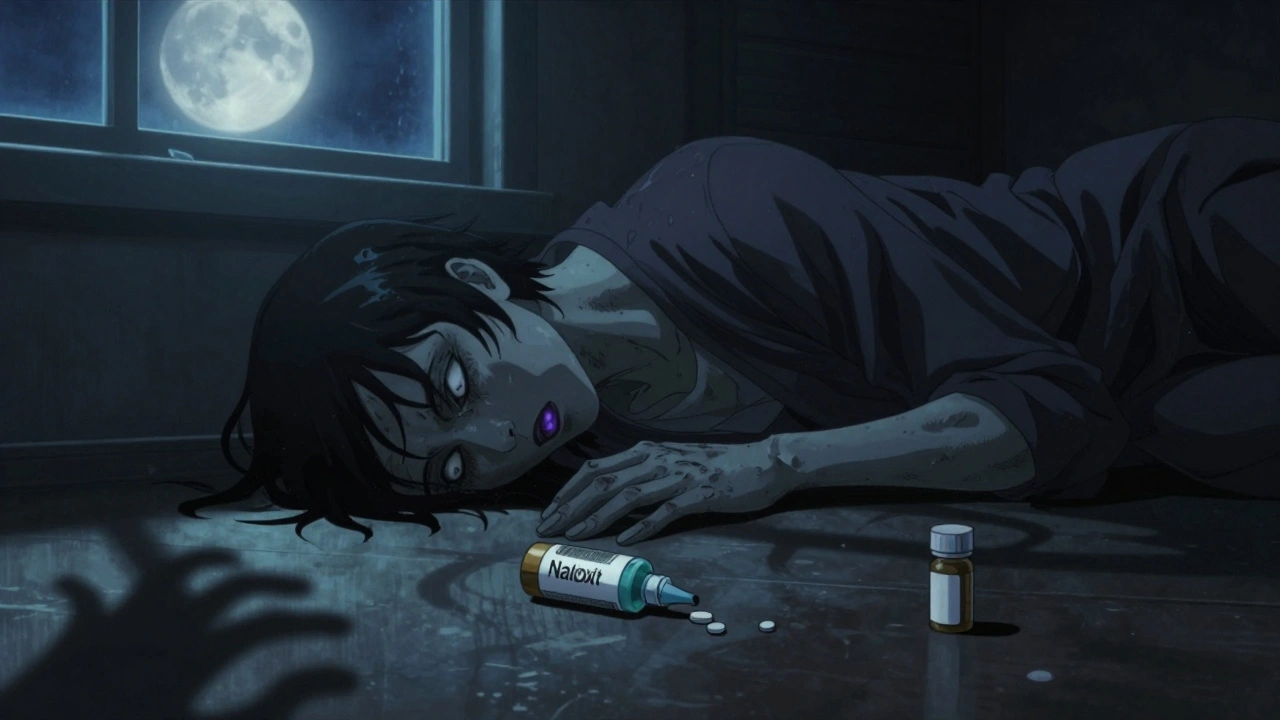
When someone overdoses on opioids, they don’t always look like they’re in trouble. They might be slumped over, quiet, or even asleep. But if you don’t act fast, they could stop breathing-and die. Opioid overdoses are happening every day across the U.S. and Canada. In 2023 alone, nearly 87,000 people in the U.S. died from opioid overdoses, mostly because of fentanyl, a synthetic opioid up to 100 times stronger than morphine. The good news? You can reverse an overdose with naloxone. And you don’t need to be a doctor to do it.
What Happens During an Opioid Overdose?
Opioids-like heroin, oxycodone, fentanyl, and morphine-slow down your breathing. That’s how they relieve pain. But when too much gets into the body, the brain’s breathing control center shuts down. The person stops breathing, or breathes so slowly that their blood doesn’t get enough oxygen. Brain damage can start in as little as four minutes. Without oxygen, the heart can stop. Death follows quickly.The signs aren’t always obvious. Someone might be unresponsive, even if you shake them hard or shout their name. Their lips or fingernails might turn blue, purple, or gray. Their skin may feel cold and clammy. Their pupils will be tiny-like pinpricks. You might hear a gurgling sound, like they’re drowning in their own saliva. This is called the "death rattle." It means their airway is blocked because they’re not breathing deeply enough to clear it.
People with darker skin tones may not show blue discoloration. Instead, their skin might look ashen or gray. Don’t wait for the classic blue color. If someone is unresponsive and breathing very slowly-fewer than two breaths every 15 seconds-that’s an overdose.
How Naloxone Works
Naloxone is not a cure. It’s a temporary fix. But it’s life-saving. Developed in 1961 and approved by the FDA in 1971, naloxone works by kicking opioids off the brain’s receptors. Think of it like a key that fits better than the original. It grabs the receptor first, pushes the opioid out, and lets breathing restart.Naloxone doesn’t work on cocaine, meth, alcohol, or benzodiazepines. That means if you’re not sure what someone took, giving naloxone won’t hurt them. It’s safe. It’s also not addictive. You can’t get high from it. And it wears off in 30 to 90 minutes. That’s the problem. Many opioids, especially fentanyl, last much longer. So the person can slip back into overdose after naloxone wears off.
That’s why calling 911 is non-negotiable-even if they wake up. Medical teams need to monitor them for at least a few hours. Rebound overdose is real. In 2023, the CDC reported that 60% of naloxone reversals required more than one dose, especially with fentanyl.
How to Administer Naloxone
There are three main ways to give naloxone: nasal spray, injection, or auto-injector. The easiest for most people is nasal spray-like Narcan or the newer generic versions.- Check for responsiveness. Shake the person’s shoulder and shout their name. If they don’t respond, assume overdose.
- Call 911. Don’t wait. Even if you’re scared, call. Good Samaritan laws protect you in 47 U.S. states and all Canadian provinces if you’re seeking help for an overdose.
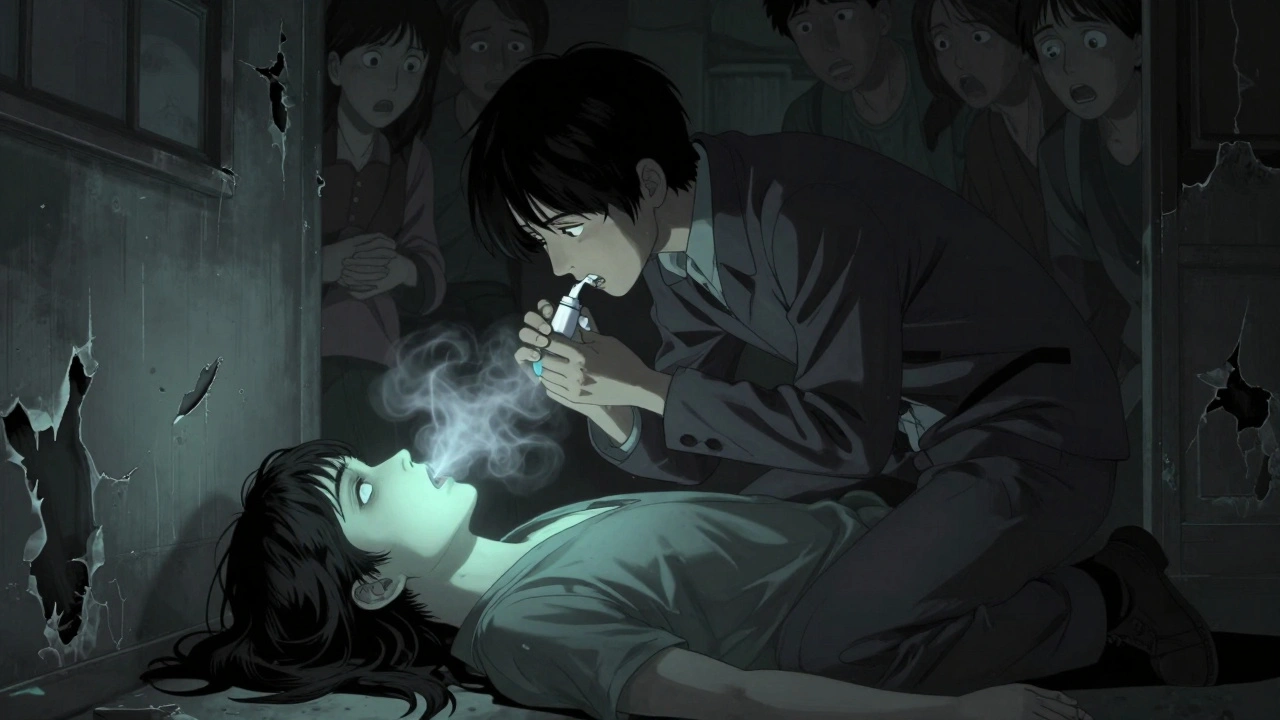
- Give naloxone. For nasal spray: Tilt the head back slightly. Insert the nozzle into one nostril. Press the plunger firmly. That’s one dose. If you have a two-pack, keep the second one ready.
- Start rescue breathing. Pinch the nose shut. Give one breath every five seconds-about 10 to 12 per minute. Watch for the chest to rise. Keep going until they breathe on their own or help arrives.
- Wait and watch. If they don’t respond in 2 to 3 minutes, give the second dose. Keep doing rescue breathing. Don’t leave them alone. Even if they wake up, they need medical care.
For intramuscular injections (like Evzio), inject into the outer thigh through clothing if needed. The auto-injector talks you through it. But nasal spray is simpler, cheaper, and just as effective for most cases.
What Not to Do
There are dangerous myths about overdose response. Don’t do any of these:- Don’t put them in a cold shower or bath. You risk drowning.
- Don’t slap them or try to make them "wake up" with pain. It won’t help.
- Don’t give them coffee, salt, or stimulants. That can make things worse.
- Don’t assume one dose is enough. Fentanyl overdoses often need two or three doses.
- Don’t leave them alone after they wake up. They can go back under.
One Reddit user, who’s reversed three overdoses in 2022, said: "The first time, it took four minutes for him to start breathing again. The second time, I had to use two sprays because the heroin was laced with fentanyl. He woke up coughing, then threw up. I turned him on his side. That saved him from choking."
Where to Get Naloxone
You don’t need a prescription in any U.S. state. You can walk into most pharmacies and ask for naloxone. Prices range from $25 to $130, depending on where you are and whether it’s brand-name Narcan or a generic. Many community health centers, syringe exchange programs, and harm reduction groups give it away for free.Some libraries, shelters, and even public restrooms in cities like Philadelphia and Vancouver now have naloxone kits in boxes labeled "Overdose Rescue." They’re designed for anyone to grab and use.
Storage matters. Naloxone loses effectiveness if it gets too hot. Keep it out of direct sunlight. Don’t leave it in a car in summer. The ideal temperature is below 104°F (40°C). Check the expiration date. Most last two to three years.
Why This Matters
Since 2019, widespread naloxone distribution has prevented an estimated 27,000 deaths a year in the U.S., according to Johns Hopkins. But we’re still falling short. The CDC estimates we need 2.1 million naloxone kits available for people at risk. We’re only distributing about half that.Why? Cost. Fear. Ignorance. Some people worry about legal trouble. Others don’t know how to use it. A 2022 survey found 24% of bystanders didn’t call 911 because they feared immigration consequences or parole violations. That’s why training matters. Community programs like Next Distro report 92% of people still remember how to use naloxone six months after training.
And yes, naloxone isn’t a solution to the opioid crisis. It’s a bandage on a wound that needs surgery. People need access to treatment-medication-assisted therapy, counseling, housing, jobs. But while we fix the system, naloxone saves lives today.
Dr. Sarah Wakeman from Massachusetts General Hospital put it bluntly: "Without addressing the root causes of addiction, overdose reversal is just a temporary fix." But sometimes, temporary is all you need to keep someone alive long enough to get help.
What to Do After You Use Naloxone
Even if the person wakes up, they need to go to the hospital. Naloxone can cause sudden withdrawal-nausea, vomiting, sweating, agitation. That’s uncomfortable, but not deadly. The bigger risk is pulmonary edema (fluid in the lungs) or another overdose once the naloxone wears off.After a reversal, the person should be monitored for at least two hours. If they’re stable, they can be referred to a treatment program. Many hospitals now have peer navigators who can connect people to methadone, buprenorphine, or counseling right away.
And if you’re the one who used naloxone? You’re a hero. Don’t feel guilty. Don’t second-guess. You did exactly what needed to be done. Save the receipt. Some programs offer free training or extra kits for people who’ve reversed an overdose.
Can naloxone be used on anyone, even if they didn’t take opioids?
Yes. Naloxone only works on opioids. If someone didn’t take opioids, it won’t hurt them. It won’t wake them up if they’re unconscious from alcohol, a seizure, or a heart attack-but it won’t make things worse either. When in doubt, give it. The risk of not giving it is death.
How many doses of naloxone might be needed for a fentanyl overdose?
Fentanyl is extremely potent. Often, one dose isn’t enough. The California Department of Public Health recommends giving a second dose after 2 to 3 minutes if breathing hasn’t improved. Some cases need three or even four doses. Always have more than one kit available if you’re in a high-risk area.
Is naloxone safe for children and pregnant women?
Yes. Naloxone is safe for all ages, including infants and pregnant women. In fact, reversing an overdose in a pregnant person can save both lives. The CDC and Health Canada both confirm naloxone is the standard of care for opioid overdose in pregnancy. Withdrawal symptoms in the baby are possible but far less dangerous than oxygen deprivation.
Can I get in trouble for using naloxone on someone?
In 47 U.S. states and all Canadian provinces, Good Samaritan laws protect you from prosecution for drug possession if you’re calling for help during an overdose. You can’t be arrested for giving naloxone. You can’t be charged for possession if you’re acting in good faith. These laws exist to save lives, not punish them.
Where can I learn how to use naloxone for free?
Many local health departments, harm reduction centers, and pharmacies offer free 20- to 30-minute training sessions. Online videos from Next Distro and the CDC are also reliable. Practice with a trainer spray (they come with kits) so you’re not fumbling when it matters. YouTube tutorials have been viewed over 1.2 million times-watch one, then practice.
Next Steps
If you use opioids-or know someone who does-get a naloxone kit today. Keep it in your bag, your car, your drawer. Don’t wait for an emergency to find out you don’t have one. Train yourself and your friends. Share the video. Talk about it. Overdose deaths aren’t inevitable. They’re preventable. And you can be the reason someone lives to see another day.
Arlen Whitlock
My name is Arlen Whitlock, and I am an expert in the field of pharmaceuticals. With a deep passion for understanding medications and their effects on various diseases, I have dedicated my life to researching and developing innovative drug therapies. I also have a keen interest in dietary supplements and their potential interactions with medication. Sharing my knowledge and insights with others is one of my greatest passions, and I fulfill this by writing about the latest advancements in medication, the treatment of various diseases, and the role of supplements in health. Through my work, I hope to contribute to the betterment of public health and the well-being of patients around the world.
Naloxone is one of those things that should be as common as fire extinguishers in every home, car, and public space. I’ve carried a nasal spray in my wallet for two years now. Didn’t think I’d ever need it-until last winter, when my neighbor’s son collapsed in the alley behind the bodega. Two sprays, five minutes of rescue breathing, and he coughed up a lung. He’s clean now. Went into rehab. I didn’t do anything heroic. I just didn’t look away.
People act like giving naloxone enables addiction. No. It gives people a second chance to get help. That’s not enabling. That’s humanity.
And yes, it works on kids, pregnant women, even dogs if they somehow ingest opioids. It’s not magic. It’s medicine. And it’s free in most places if you ask.
Stop hoarding it like it’s contraband. Get one. Teach your cousins. Leave one at the library. We’re not saving lives by waiting for someone to die before we act.
Every minute you wait, the brain dies. Every second you act, someone lives.
I’m not a doctor. I’m not a hero. I’m just someone who didn’t let fear win.
While the intent behind naloxone distribution is undoubtedly laudable, one must not conflate symptom management with systemic resolution. The proliferation of naloxone kits, while tactically prudent, risks reinforcing a culture of harm reduction that inadvertently absolves society of its responsibility to address the underlying sociopolitical and economic determinants of substance use disorder.
One might argue, with considerable merit, that the availability of reversal agents diminishes the urgency of policy reform-particularly in regard to mental health infrastructure, housing security, and the decriminalization of addiction as a public health issue rather than a moral failing.
Moreover, the normalization of opioid use in the context of such readily available countermeasures may, paradoxically, contribute to a latent normalization of risk-taking behavior among vulnerable populations.
One must not mistake a bandage for a cure. And yet, we continue to treat the wound while the hemorrhage persists.
i think we’re all just trying to keep each other alive and nobody’s perfect and that’s fine. i used naloxone on my brother last year. he woke up screaming and threw up everywhere. i was crying. he was mad at me. he said i ruined his chill. but he’s alive. and now he’s in therapy. i don’t know if it’s gonna stick. but he’s here. and that’s enough for today.
also fentanyl is wild. like, imagine if your painkiller was basically a silent ghost that sneaks in and stops your lungs. no warning. no drama. just… gone. we gotta stop pretending we’re not living in a horror movie sometimes.
Naloxone? HA. That’s just the government’s way to keep the drug trade alive. You think they want addicts to die? No. They want you dependent. They want you coming back for more. Fentanyl is engineered. It’s not natural. It’s a chemical weapon disguised as painkillers. The CDC? The FDA? All bought off by Big Pharma. They make billions off the crisis. And now they hand out naloxone like candy so you don’t riot. You’re being played. Wake up. This isn’t medicine-it’s control.
This whole thing is just a liberal scam. We don’t need to hand out free antidotes to drug addicts. We need to lock up the dealers. And the addicts who keep using? Let them die. Taxpayers shouldn’t fund their bad choices. Why should I pay for someone’s heroin habit? We’re not a daycare for criminals. Naloxone is just encouraging more use. You want to save lives? Stop enabling them.
Naloxone works. No debate. Get one. Keep it. Use it. Call 911. Done. No drama. No politics. Just save a life. I’ve seen it. It’s simple. You don’t need a degree. You just need to care enough to act.
I don’t care if it’s ‘life-saving.’ This country is falling apart because we keep coddling junkies. You give someone naloxone, they wake up, go right back to using, and then you do it again. It’s a cycle. We’re not fixing anything. We’re just buying time for people who don’t want to be saved. Why not just let nature take its course? We’re drowning in debt and crime because we keep rewarding bad behavior.
Let me tell you something I learned from volunteering at a harm reduction center for three years. Naloxone isn’t just a spray. It’s a conversation starter. The first time I gave someone naloxone, they didn’t thank me. They screamed at me. Called me a cop. Said I ruined their high. But the next week, they came back-not for more drugs, but for a job application. They asked if I knew anyone hiring. They’d been clean for 11 days. They said the fact that someone didn’t walk away made them feel like they still mattered.
It’s not about whether they deserve it. It’s about whether we still believe people can change. And if we don’t believe that, then what are we even doing here?
I’ve seen people come back from five overdoses. I’ve seen a 17-year-old girl get her GED after her third reversal. I’ve seen a dad reunite with his kids because someone didn’t let him die on a park bench.
Yeah, naloxone doesn’t fix the system. But it buys time. And time? Time is the one thing no one can take back once it’s gone. So yeah, I’ll keep handing out sprays. I’ll keep teaching people how to breathe for someone else. Because if I don’t, who will?
And if you think that’s naive? Fine. But ask yourself this: when your brother, your sister, your friend, your neighbor is lying there, blue and silent, will you be the one who hesitates? Or will you be the one who acts?
I’m not asking you to love them. Just don’t let them die alone.