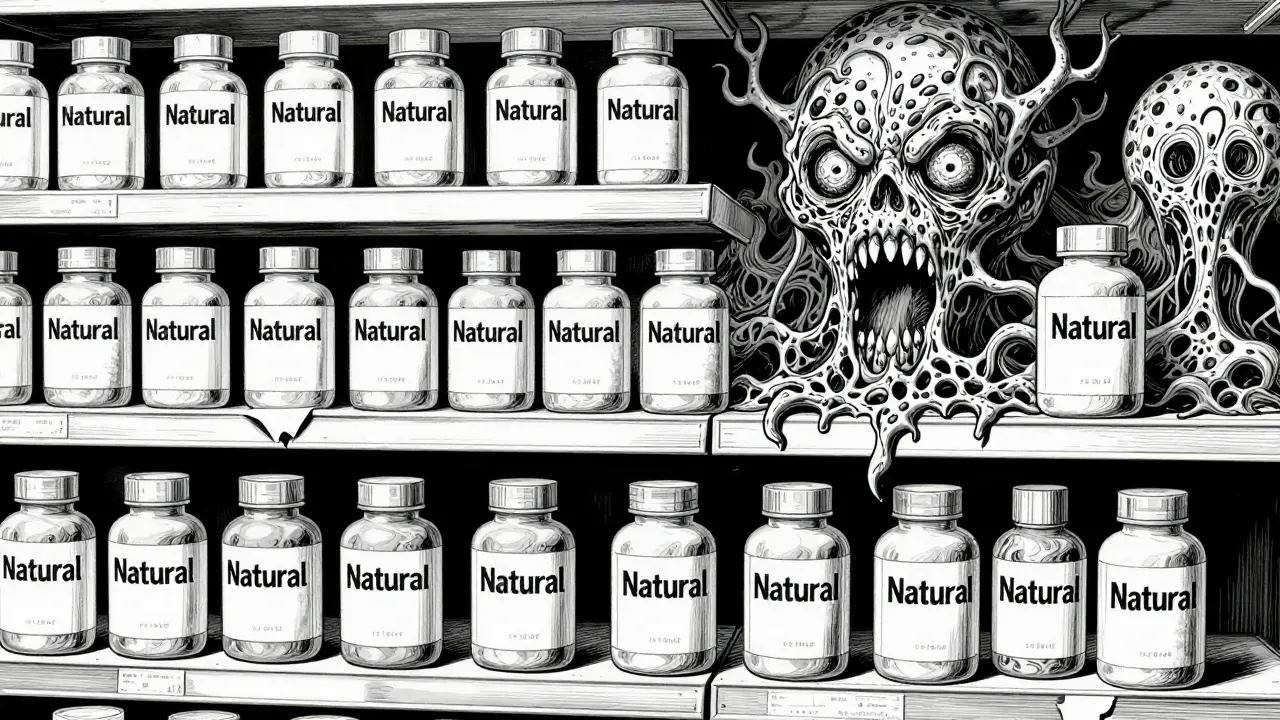
Most of us assume that if a product is labeled "natural," it's automatically safe. We grab a bottle of vitamins or an herbal extract thinking it can only help, but the reality is that medication safety fundamentals require us to treat every ingested substance-whether it comes from a pharmacy or a health food store-as a chemical that changes how our body functions. From unexpected emergency room visits to dangerous interactions with life-saving drugs, the risks are often hidden in plain sight.
The core problem is a massive regulatory gap. Unlike prescription drugs, which must prove they are safe and effective before they hit the shelf, supplements are regulated more like food. Under the Dietary Supplement Health and Education Act (DSHEA) of 1994, the FDA doesn't approve supplements for safety or effectiveness before they are marketed. Instead, the FDA has to prove a product is unsafe *after* people start getting sick before they can pull it from the shelves. This creates a dangerous lag time where consumers are essentially the test subjects.
The Danger of "Natural" Interactions
When you take a supplement alongside a prescription medication, you aren't just adding a vitamin; you're introducing a new variable into your body's chemistry. These interactions usually happen in two ways: pharmacokinetic and pharmacodynamic. In simple terms, some supplements change how your liver processes a drug, while others interfere with what the drug is actually trying to do in your system.
Take St. John's wort as a prime example. This herbal supplement is often used for mood, but it's a powerhouse of interaction. It can reduce the plasma concentration of oral contraceptives by up to 15%, potentially leading to unplanned pregnancies. Even more serious, it can slash cyclosporine levels (an immunosuppressant) by 50-60% within just two weeks. If you're taking a medication to prevent organ transplant rejection, this interaction could be fatal.
Other common culprits include:
- Asian ginseng (Panax ginseng): This can trigger enzymes that make calcium channel blockers, statins, and antidepressants less effective.
- Ginkgo biloba, garlic, and fish oil: When paired with blood thinners like warfarin, these can increase bleeding time by 20-30%, turning a small cut into a medical emergency.
- Vitamin K: This can block the effects of warfarin by 40-50%, significantly increasing the risk of a blood clot.
Toxicity: When More Isn't Better
We often think of vitamins as things we can't have too much of, but dose-dependent toxicity is a very real threat. Fat-soluble vitamins, in particular, build up in your system because your body can't flush them out as easily as water-soluble ones.
Vitamin A is a classic example. While essential for vision, chronic intake over 10,000 IU per day can lead to liver impairment, skin peeling (desquamation), and even severe intracranial hypertension. Vitamin D follows a similar dangerous path; excessive doses can cause hypercalcaemia, which manifests as intense thirst, seizures, or even coma in extreme cases. For elderly patients, high intermittent doses of Vitamin D have actually been linked to a 15-20% increase in falls and fractures.
| Supplement | Risk/Interaction | Potential Outcome |
|---|---|---|
| Vitamin E | Antiplatelet effect (>400 IU/day) | 10% increase in hemorrhagic stroke risk |
| Green Tea Extract | Hepatotoxicity | 22% of supplement-related liver injuries |
| Bitter Orange | Sympathomimetic effect | Systolic blood pressure increase of 10-15 mmHg |
| Antioxidants (C & E) | Interference with chemo | 25-30% reduction in chemotherapy effectiveness |

High-Risk Scenarios and Specialized Care
For some people, the risks aren't just "side effects"-they are critical complications. Cancer patients are particularly vulnerable. Radiation oncologists have noted that certain supplements can make the skin hypersensitive during radiation therapy, causing severe reactions that can delay life-saving treatment by several weeks.
Then there is the risk of Serotonin Syndrome. This occurs when too much serotonin builds up in the brain, often caused by combining a supplement like St. John's wort with a prescription SSRI like sertraline. This is a medical emergency that can cause confusion, rapid heart rate, and muscle rigidity.
Even the way you buy your supplements matters. About 45% of adverse event reports involve products bought online. Because quality control is often non-existent for third-party online sellers, you might not be getting what's on the label, or worse, you might be getting an undeclared pharmaceutical ingredient hidden in a "natural" pill.

How to Protect Yourself
The most dangerous interaction is the one your doctor doesn't know about. Roughly 67% of dangerous interactions happen simply because the patient didn't mention their supplement use. Doctors aren't mind readers, and unless you tell them, they'll prescribe medications based on a chemistry that isn't actually present in your body.
To stay safe, follow these concrete steps:
- Keep a Master List: Don't rely on memory. Use a tool like the NIH's "My Dietary Supplement and Medicine Record" to track everything you take, including the exact dosage.
- The Pre-Surgery Pause: Many herbal supplements affect bleeding or anesthesia. Always notify your surgical team about every supplement you use at least two weeks before any procedure.
- Question the "Natural" Label: If a product claims to cure a disease or provides "rapid results," treat it with extreme suspicion.
- Report Bad Reactions: If you experience a rash, shortness of breath, or heart palpitations after starting a supplement, stop immediately and report it through the FDA's MedWatch system.
Are all dietary supplements unsafe?
No, most supplements are safe when used correctly. The risk comes from improper dosing, using them to replace necessary medical treatment, or taking them in combination with drugs that create dangerous chemical interactions.
Why does the FDA not ban all dangerous supplements?
Because of the DSHEA Act of 1994, the FDA is legally required to prove a supplement is unsafe *before* they can ban it. This is a much higher burden of proof than what is required for prescription drugs, meaning many risky products stay on the market for years before action is taken.
Can vitamins cause liver damage?
Yes. While rare with standard multivitamins, specific extracts like green tea extract have been linked to a significant percentage of supplement-related liver injuries (hepatotoxicity) according to the DILIN network.
What should I do if I suspect a supplement is interacting with my medication?
Stop taking the supplement immediately and contact your prescribing physician. Do not simply stop your prescription medication without medical guidance, as this can cause other health crises.
Is it safer to buy supplements from a store than online?
Generally, yes. Data shows that 45% of adverse event reports are linked to online purchases, where quality control is often weaker and the risk of contamination or mislabeling is higher.

Harrison Duncombe
I have been working in the pharmaceuticals industry for over two decades and have developed a passion for medications and their impact on health. I enjoy researching new treatments and writing about their effects on diseases. Sharing my knowledge about supplements is something I find fulfilling. Through my work, I aim to provide valuable insights and guidance to those seeking understanding in this complex field.
just a heads up for anyone reading this if you are on a blood thinner definitely check with your doc before taking omega 3 or garlic supplements because it really can thin the blood too much and lead to bruising or worse
Natural doesn't mean safe. Basic logic.
This is exactly why I curate every single thing my children touch!!! The lack of regulation is absolutely appalling!!!! How can we trust these companies when the FDA just waits for people to get sick?!?! It's a systemic failure!!!!
It is quite exhausting to read such a simplistic take on a complex biological issue. The prose is functional, I suppose, but the overall sentiment is dreadfully alarmist.
You people always trust western medicine blindly 🙄 My country has used Ayurveda for thousands of years and we dont need your fake FDA rules to tell us what is safe 🇮🇳💪
It is important to remember that many of these herbs come from diverse cultural traditions. While we must be safe with modern medicine, let's keep a respectful space for traditional wisdom too.
There is a profound irony here. We strive for purity in our supplements while ignoring the chemical complexity of our own existence. Perhaps the danger isn't the supplement, but the hubris of thinking we can control biology with a pill.
Please. The DSHEA Act is just a puppet show for Big Pharma to keep us dependent on their synthetic poisons while they intentionally keep the "natural" options unregulated so they can eventually ban them. It's all a choreographed dance of control to keep the masses docile and sick. I've seen the patterns and it's honestly embarrassing that some of you actually believe the FDA is trying to "protect" you. The elitist mindset that only a university degree allows you to understand your own body is just peak arrogance. They want us scared of a bit of St. John's wort so we buy their overpriced antidepressants. Wake up and realize that the regulatory gap is a feature, not a bug, designed to discredit natural healing. Just follow the money and you'll see exactly who benefits from this fear-mongering. It's a joke.
I've seen this happen in the clinic. The best move is to just be honest with your provider. Even if it's a simple vitamin, it can change how your meds work. Just keep a list on your phone and show it to the doc at every visit, it makes their life way easier and keeps you safe.
Omg ppl rly believe this stuff?? I take my vitmins every day and im fine. Your just tryin to scare ppl into spending more money on doctor visitss
The existential dread of trusting a label is the only honest part of this. We're all just guessing in a void of corporate greed.
Oh honey, look at us pretending the government actually cares about our liver. This is just a cute little attempt at a warning while the real toxins are pumped into our water by the same people writing these regulations. Absolute gold.
You must take immediate action to organize your medical records! It is an absolute necessity for your survival! Do not be lazy with your health! Discipline is the only way to avoid these catastrophes!
totally agree that keeping a list is the way to go