
Medication Interaction Checker
Check Safety of Complementary Treatments
See if your medication safely combines with evidence-based complementary treatments. Based on latest research from JAMA Oncology and National Cancer Institute.
When you’re taking medication for a chronic condition-whether it’s high blood pressure, cancer, depression, or diabetes-you’re not just managing the disease. You’re also dealing with the side effects that come with it. Nausea. Fatigue. Dry mouth. Numbness in your fingers. Insomnia. These aren’t just inconveniences; they can make life feel unbearable, even if the medicine is working. Many people turn to complementary treatments to ease these symptoms, but not all of them are safe or supported by science. The good news? Some have solid evidence behind them. And the key is knowing which ones actually work-and which ones could hurt you.
Acupuncture for Nausea, Pain, and Constipation
Acupuncture is one of the most studied complementary therapies for medication side effects. If you’re on chemotherapy and fighting nausea, acupuncture has been shown to reduce symptoms by about 36% compared to sham treatments, according to a 2017 meta-analysis in JAMA Oncology. That’s not a small improvement-it’s the difference between needing strong anti-nausea drugs every few hours and being able to keep food down.
It also helps with opioid-induced constipation, a common problem for people on long-term pain meds. A 2020 Cochrane review of 41 trials found acupuncture was 32% more effective than standard care alone at improving bowel movements. Patients reported fewer bloating episodes and less need for laxatives.
For neuropathy from chemo drugs like taxol, many patients report significant pain relief after weekly sessions. One verified patient in a Trustpilot review said acupuncture cut her nerve pain by half. Unlike pills, acupuncture doesn’t add more chemicals to your system. It works by stimulating nerves and releasing natural pain-relieving chemicals in the brain. The risks are low when done by a licensed practitioner-minor bruising or soreness at needle sites are the most common issues.
Ginger for Chemotherapy-Induced Nausea
If you’ve ever tried ginger tea or candies for an upset stomach, you’ve probably noticed it helps. Science backs that up. A 2013 study in the Journal of Pain and Symptom Management found that taking 0.5 to 1.0 grams of powdered ginger daily reduced chemotherapy-induced nausea by 40% compared to placebo. That’s comparable to some prescription anti-nausea drugs.
One Reddit user, u/ChemoSurvivor2022, shared that ginger capsules reduced their nausea by 70% compared to ondansetron alone. That’s not anecdotal-it matches clinical results. Ginger works by calming the stomach lining and blocking serotonin receptors involved in nausea. It’s available as capsules, tea, chews, or even fresh root grated into water.
But here’s the catch: ginger can thin your blood. If you’re on warfarin, aspirin, or other anticoagulants, talk to your doctor before using it regularly. Even though it’s natural, it’s not harmless. Stick to the recommended dose. More isn’t better.
Massage Therapy for Fatigue and Stress
Chronic illness and long-term medication use drain your energy. Fatigue isn’t just feeling tired-it’s a deep, bone-weary exhaustion that doesn’t go away with sleep. Massage therapy doesn’t cure it, but it helps. A 2021 study in cancer patients showed that weekly 60-minute massages reduced fatigue by nearly 30% over four weeks. It also lowered cortisol levels, the body’s main stress hormone.
Unlike drugs, massage doesn’t interact with your meds. It’s safe for most people, even those with heart conditions or low platelet counts (as long as the therapist avoids deep pressure). The key is consistency. One session won’t change much. But if you do it weekly for a month, many patients report better sleep, less anxiety, and more motivation to get through the day.

Hawthorn for Heart Medication Side Effects
If you’re taking medication for heart failure-like ACE inhibitors or beta-blockers-you might be familiar with dizziness, fatigue, or a dry cough. Hawthorn, a herbal extract from the hawthorn plant, has been studied for its ability to support heart function without replacing your prescribed drugs.
A 2022 American Heart Association scientific statement found that hawthorn (specifically the extract WS 1442) was generally well tolerated. In clinical trials, side effects like dizziness or headaches were no more common than with a placebo. It may help improve exercise tolerance and reduce shortness of breath in people with mild heart failure.
But don’t just buy any hawthorn supplement. The extract matters. Only WS 1442 has been tested in rigorous trials. Other brands may not contain the right amount or type of active compounds. And while it’s safe with most heart meds, it could theoretically interact with digoxin. Always tell your cardiologist if you’re using it.
What to Avoid: Dangerous Herbs and Supplements
Not all natural remedies are safe. Some can be deadly when mixed with common medications.
- Blue cohosh: Can cause dangerously high blood pressure and fast heart rate. Never use if you have heart disease or take blood pressure meds.
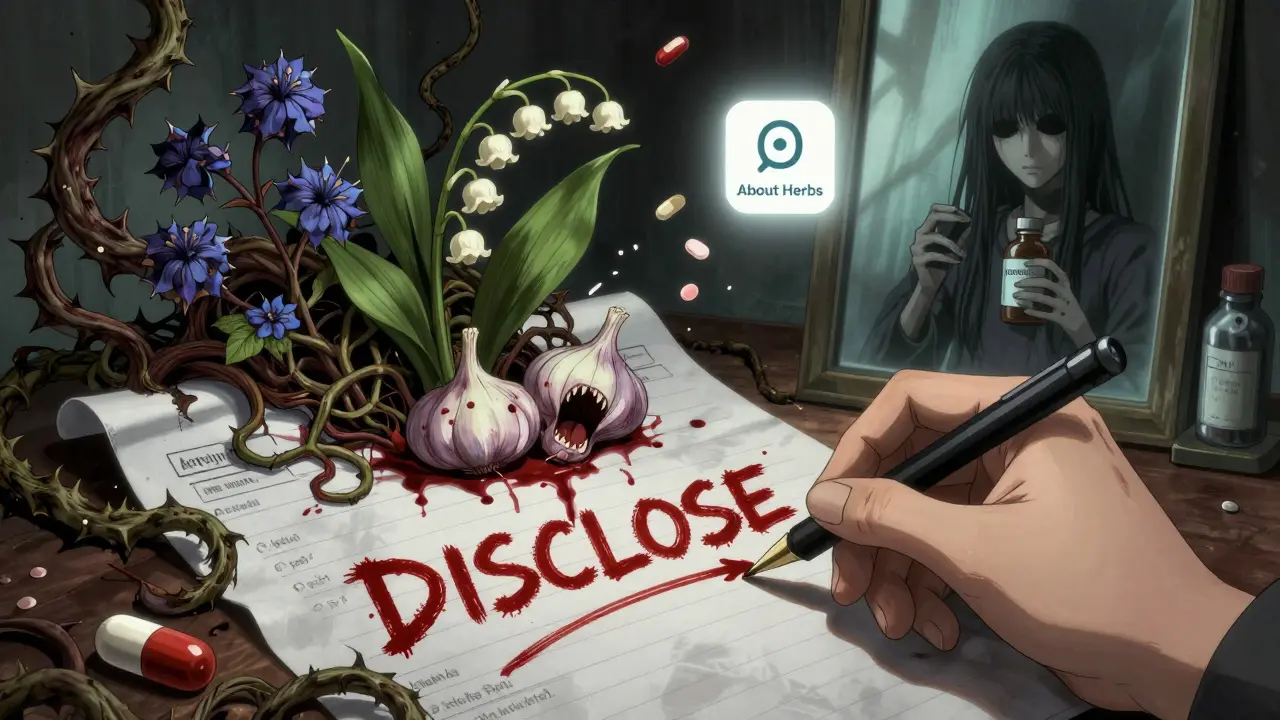
- Lily of the valley: Extremely dangerous with digoxin. It can drop your potassium to life-threatening levels.
- Garlic supplements: Can increase bleeding risk when taken with aspirin, warfarin, or even some blood pressure drugs like lisinopril.
- Milk thistle: Often used for liver support, but one Reddit user was hospitalized for liver toxicity after taking it during chemo. It can interfere with how your body breaks down certain cancer drugs.
- Antioxidants (vitamins A, C, E, selenium): Some oncologists worry these might protect cancer cells during chemo or radiation. The evidence isn’t clear, but many doctors advise avoiding high-dose supplements during active treatment.
These aren’t just warnings. These are real cases. A 2018 study in Journal of Clinical Oncology found that over 12% of cancer patients using complementary therapies needed urgent health warnings because of dangerous interactions. Many didn’t even know they were at risk.
Why Disclosure Matters More Than You Think
Here’s the biggest problem: most people don’t tell their doctors about the supplements or herbs they’re taking. In a UK hospital study, only 21% of patients using complementary treatments disclosed them to their healthcare team. That’s a huge gap.
Why? Fear. Shame. Belief that “it’s just a supplement.” But here’s the truth: if your doctor doesn’t know you’re taking ginger, garlic, or hawthorn, they can’t protect you. They might prescribe a new drug that interacts with it. Or miss a cause of your new symptom.
Always keep a written list: what you take, how much, how often, and why. Bring it to every appointment. Use apps like Memorial Sloan Kettering’s “About Herbs” (updated in 2023) to check for interactions. It’s free, reliable, and used by over 11,000 people monthly.
How to Use Complementary Treatments Safely
There’s no magic formula, but there’s a smart approach:
- Don’t stop your meds. Complementary treatments are for support, not replacement.
- Choose therapies with strong evidence. Acupuncture, ginger, massage-these have multiple studies backing them.
- Start low, go slow. Try one thing at a time. Give it 2-4 weeks before judging if it works.
- Check for interactions. Use the NCCIH interaction checker or About Herbs app before starting anything.
- Use licensed practitioners. For acupuncture or massage, look for state-licensed providers. Avoid online sellers of unregulated herbs.
- Track your symptoms. Keep a simple journal: “Took ginger, nausea went from 8/10 to 3/10.” That helps you and your doctor see what’s working.
The goal isn’t to replace medicine. It’s to make living with it more bearable. And when done right, that’s possible.
What’s Changing Right Now
In 2023, the NIH invested $142 million into research on complementary treatments for medication side effects. That’s more than ever before. The National Cancer Institute now recommends acupuncture and ginger as part of standard supportive care for cancer patients. Over 70% of U.S. cancer centers offer integrative medicine services.
But progress is slow. Only 32% of doctors know how to use the free interaction tools available. Many patients still get misleading advice from wellness influencers or unregulated supplement stores. The market for these treatments is growing fast-$191 billion globally in 2022-but safety standards haven’t kept up.
That’s why your role matters. Be informed. Ask questions. Share what you learn. And never assume something is safe just because it’s natural.
Can I use ginger instead of my anti-nausea medication?
No. Ginger can help reduce nausea, but it’s not a replacement for prescribed anti-nausea drugs like ondansetron or metoclopramide. Use it as a supplement to your treatment, not a substitute. Stopping your medication without medical advice can be dangerous.
Is acupuncture safe if I have low platelets?
Yes, if done by a trained professional who knows how to adjust for your condition. They’ll use thin needles, avoid deep insertion, and skip areas with bruising or low blood counts. Always tell your acupuncturist about your platelet level before treatment.
Are all herbal supplements regulated like prescription drugs?
No. In the U.S., herbal supplements are regulated as food, not medicine. That means they don’t have to prove safety or effectiveness before being sold. Contamination, incorrect dosing, and hidden ingredients are common. Stick to brands with third-party testing (USP, NSF, or ConsumerLab labels).
Can I take melatonin for sleep while on antidepressants?
Melatonin is generally safe with most antidepressants, but it can increase drowsiness or affect how your body processes certain drugs like fluoxetine or sertraline. Talk to your doctor before starting it, especially if you’re on multiple medications. Start with the lowest dose (0.5 mg).
Why do some doctors seem skeptical of complementary treatments?
Many doctors aren’t trained in complementary medicine and have seen patients harmed by unsafe products or false claims. They’re not against these treatments-they’re against unproven or dangerous ones. When you bring evidence-based options like acupuncture or ginger, supported by research and discussed openly, most doctors are open to including them in your care plan.
If you’re struggling with side effects, you’re not alone. And you don’t have to suffer through them alone. With the right information and communication, you can find relief that’s safe, effective, and truly yours.

Arlen Whitlock
My name is Arlen Whitlock, and I am an expert in the field of pharmaceuticals. With a deep passion for understanding medications and their effects on various diseases, I have dedicated my life to researching and developing innovative drug therapies. I also have a keen interest in dietary supplements and their potential interactions with medication. Sharing my knowledge and insights with others is one of my greatest passions, and I fulfill this by writing about the latest advancements in medication, the treatment of various diseases, and the role of supplements in health. Through my work, I hope to contribute to the betterment of public health and the well-being of patients around the world.
This is the kind of post that actually makes me feel hopeful. I’ve been on chemo for 18 months and ginger capsules changed my life-no more vomiting before breakfast. Acupuncture didn’t hurt either. Just wish more doctors would say this out loud instead of shrugging.
Thanks for laying it out so clearly.
Everyone’s acting like these are miracle cures but let’s be real-acupuncture is just placebo with needles. Ginger? It’s spicy tea. Massage? You’re paying someone to touch you. The real treatment is still the chemo. Stop romanticizing folk medicine like it’s science.
Also, hawthorn? That’s a plant. Plants don’t get FDA approval. You’re playing Russian roulette with your heart.
Sajith’s comment is dangerously wrong. Acupuncture has been validated in over 40 RCTs for nausea and neuropathy. Ginger’s mechanism is well-documented via 5-HT3 receptor antagonism. Hawthorn WS 1442 has phase III trial data. This isn’t folk medicine-it’s integrative oncology.
Also, the NIH funding number is correct. 142 million in 2023. That’s not a typo. If you’re dismissing evidence because it’s ‘natural,’ you’re the one being unscientific.
Oh wow, another ‘evidence-based’ post where they name-drop Cochrane and JAMA like it’s a religious text. Next they’ll tell us turmeric cures cancer and we should all drink colloidal silver.
Look, I get it-you want to feel empowered. But if your doctor doesn’t recommend it, it’s probably because they’ve seen people die from ‘natural’ supplements. I’ve seen it. Twice. Don’t be the guy who Googles ‘herbs for chemo’ and then blames the system when it goes wrong.
Also, ‘trustpilot review’? Really? That’s your evidence? You’re not a patient, you’re a content consumer.
I’ve been on beta-blockers for 5 years. Hawthorn helped my dizziness. Not magic. Not a cure. Just… less lightheaded when I stand up. I track it in a notes app. Took 3 weeks. Worth it.
Don’t overthink it. Try one thing. See what happens. Tell your doctor. Done.
For anyone new to this-start with ginger. It’s cheap, easy, and most people tolerate it. I did 500mg capsules 3x a day during chemo. My nausea dropped from ‘can’t eat anything’ to ‘can eat toast and tea.’
And yes, talk to your doctor about blood thinners. But don’t let fear stop you from trying something that might help. You deserve to feel better.
Also, massage therapists who specialize in oncology are lifesavers. Find one. They know how to work around low platelets.
Why are we letting people take herbs with cancer meds I mean come on
My cousin took milk thistle during chemo and ended up in the ER with liver failure
Why do people think natural means safe
It’s not a vitamin it’s a chemical
Doctors know this
But they’re too nice to say no
So you die
While the author’s intent may be benevolent, the structural and rhetorical deficiencies of this article are egregious. The use of anecdotal Reddit testimonials as corroborative evidence undermines its scientific credibility. Furthermore, the uncritical citation of Trustpilot reviews-unregulated, user-generated, and statistically meaningless-constitutes a flagrant violation of evidence-based reasoning.
Additionally, the assertion that acupuncture ‘stimulates nerves and releases natural pain-relieving chemicals’ is a reductive neurophysiological explanation lacking specificity. It is neither falsifiable nor mechanistically precise.
One cannot, in good conscience, recommend a therapy based on ‘many patients report’ without controlled, double-blind data. This is not medicine. It is wellness marketing dressed in lab coats.
They’re hiding the truth. Acupuncture is a Chinese government psyop to get Americans dependent on needles so they can control our nervous systems. Ginger? That’s just a cover for GMO spice. The FDA doesn’t want you to know that hawthorn was banned in 2017 in 14 countries because it causes heart arrhythmias. The WHO is in on it. Bill Gates funds the ‘integrative medicine’ scam to push biochips through your supplements.
And why is everyone talking about ‘licensed practitioners’? Who licensed them? The same people who told you vaccines were safe. Wake up.
Just take your pills. Stay obedient. Don’t listen to this propaganda.
Stop giving people false hope
Most of this stuff doesn’t work
And the ones who say it does are just lucky
Or delusional
Doctors know this
But they’re too nice to tell you
So you spend your last dime on a $100 herbal tea
And die anyway
Be real
Hey, I get why some of you are skeptical. I used to be too. But after my mom’s neuropathy got worse on chemo and we tried acupuncture-she could hold a cup again. No magic. Just science. And yes, we told her oncologist. He said ‘good, keep doing it.’
It’s not about replacing meds. It’s about reducing suffering. If you’ve never had nausea that makes you cry, maybe you can’t relate. But for those of us who have? This isn’t woo. It’s dignity.
And yes, check for interactions. Always. But don’t throw the baby out with the bathwater.
As someone from India who grew up with turmeric and ginger in everything-I never thought it’d be in a JAMA paper. But it is. And that’s kinda beautiful.
My grandma used ginger tea for nausea. My oncologist now says ‘try it.’ No contradiction. Just evolution.
Western medicine doesn’t have to be the only truth. It just has to be honest. And this post? It’s honest.
Also-don’t trust random Amazon supplements. Go for USP. I learned that the hard way.