
Why You Keep Missing Your Medications (And How to Fix It)
Let’s be honest: you know you’re supposed to take your meds. You’ve read the label. You’ve talked to your doctor. But somehow, between breakfast, work calls, and forgetting where you put your keys, that little pill slips through the cracks. You’re not lazy. You’re not careless. You’re just human. And your brain is wired to forget things that aren’t tied to something already routine.
Here’s the hard truth: about half of people with long-term health conditions don’t take their meds as prescribed. That’s not because they don’t care-it’s because the system doesn’t work for real life. Missed doses don’t just mean feeling off for a day. They lead to hospital visits, worse symptoms, and higher costs. In the U.S. alone, non-adherence adds up to $300 billion a year in avoidable care. But here’s the good news: fixing this isn’t about willpower. It’s about design.
Pair Your Pills With What You Already Do
The most reliable way to remember your meds is to attach them to something you already never forget. Brushing your teeth? That’s a daily ritual. So is making coffee, feeding your dog, or checking your phone in the morning. Studies show that people who link their pills to these habits are up to 72% more likely to stay on track.
Try this: write down your current daily routine. Circle the moments you never miss. Now, match your meds to those spots. If you take a pill in the morning, do it right after you brush your teeth. If it’s an evening dose, take it right after you turn off the TV. Don’t overthink it. The goal isn’t perfection-it’s consistency. Your brain doesn’t need a reminder. It needs a trigger.
Use a Pill Organizer-But Do It Right
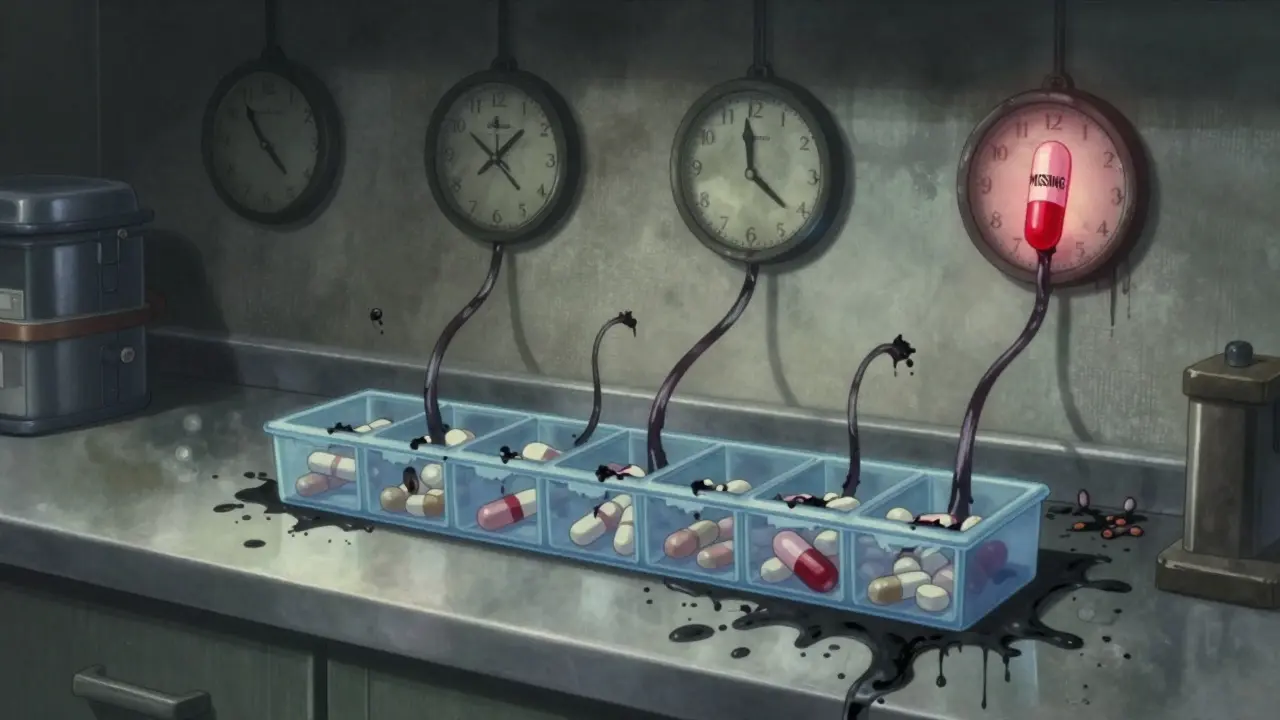
Pill organizers aren’t just for grandmas. They’re one of the most effective tools out there. A weekly organizer with separate compartments for morning, afternoon, and bedtime doses can cut missed pills by up to 35%. But most people use them wrong.
Don’t just dump all your pills in on Sunday night. That’s how you end up with a messy box and no idea what you’ve already taken. Instead, set aside 20 minutes every Friday evening. Lay out your pills one day at a time. Use colored labels: blue for morning, red for afternoon, yellow for night. If you take the same dose every day, use a simple 7-day box. If your schedule changes, get a multi-compartment box with AM/PM slots. And here’s a pro tip: keep the organizer where you’ll see it-on the counter, next to your toothbrush, not tucked in a drawer.
Technology Helps-But Only If It Fits You
Smartphones can be great reminders. About 63% of people aged 50-75 say alarms helped them stick to their meds. But if you hate your phone or find the settings confusing, an alarm is just another annoyance. And for many older adults, it’s worse than useless.
Try this: if you’re comfortable with tech, set two alarms-one 30 minutes before your usual time, and one at the exact time. Label them clearly: “AM Blood Pressure Pill.” If you’re not, skip the phone. Use a timer cap that beeps when it’s time. Or get a simple digital pill dispenser that lights up and plays a sound. The best tool is the one you’ll actually use. Don’t force tech. Find what fits your life.
Track It Visually-No Apps Needed
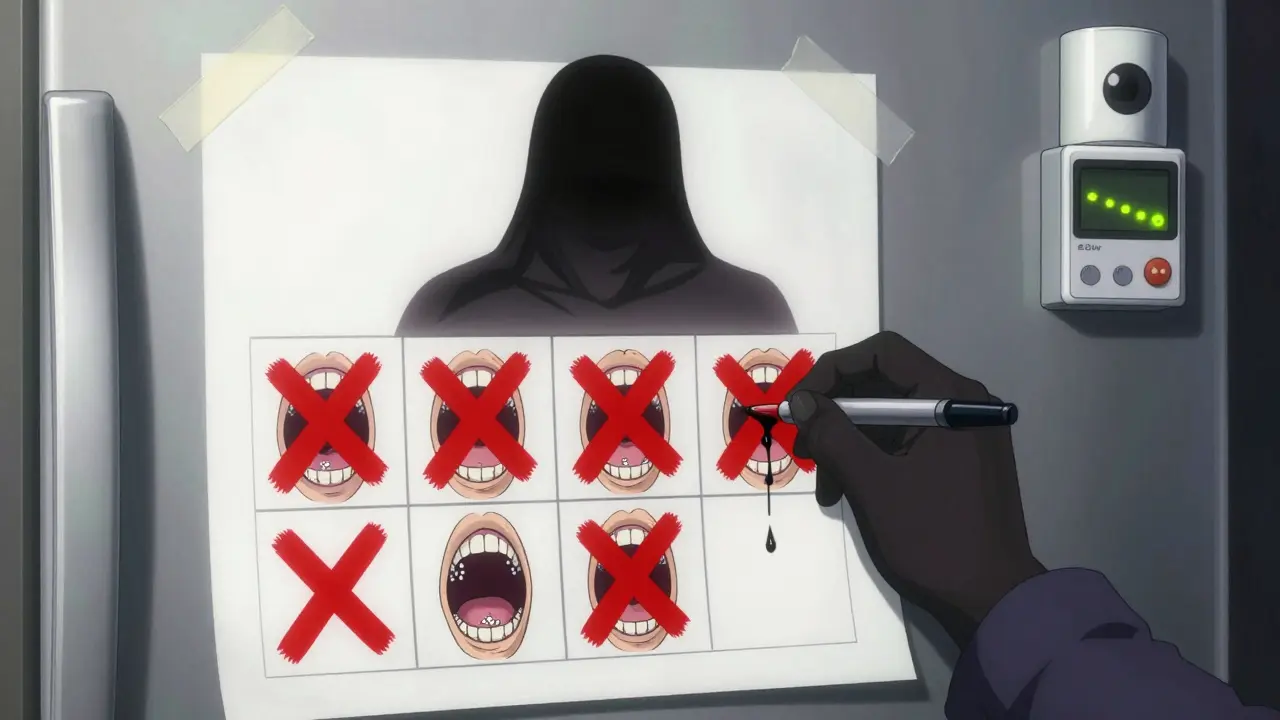
There’s something powerful about checking off a box. It’s visual. It’s satisfying. And it works. In one study, people who used a printed calendar and marked each dose with a big X had 32% fewer missed pills than those who relied on memory.
Grab a calendar from the drugstore or print one from the internet. Tape it to your fridge. Every time you take your meds, make a bold mark. No pen? Use a sticker. No calendar? Use a dry-erase board on your bathroom mirror. The point isn’t to be artistic-it’s to see your progress. After a week, you’ll have a chain of checks. You won’t want to break it.
Simplify Before You Complicate
Do you take five different pills at three different times a day? That’s not a routine-it’s a full-time job. And it’s no wonder people give up. The simpler your regimen, the better you’ll stick to it.
Ask your doctor or pharmacist: “Can any of these be combined? Can I take this one with food so I can link it to breakfast?” Many medications can be safely switched to once-daily doses. One study found that reducing daily doses from four to one improved adherence by 40%. Don’t assume your current schedule is set in stone. A quick conversation could cut your daily pill count in half.
What to Do When Life Gets in the Way
Travel. Holidays. Busy weeks. Illness. These aren’t excuses-they’re part of life. And they’re the top reason people fall off track. Sixty-three percent of patients say trips disrupt their routine.
Plan ahead. Pack a travel pill case with a week’s supply. Bring a printed list of your meds and dosing times. If you’re flying, keep meds in your carry-on. And if you miss a dose? Don’t panic. Don’t double up unless your doctor says so. Just get back on track the next day. One missed pill won’t ruin everything. But giving up will.
Ask for Help-It’s Not Weakness
Some people do better with a partner. A spouse, a friend, even a neighbor. A buddy system where you check in with someone else to confirm you took your meds works for 58% of users. But only if that person is reliable.
If you have someone you trust, ask them to text you every morning: “Did you take your pill?” If not, call a local pharmacy. Many offer free weekly check-in calls. Or join a support group-online or in person. You’re not alone. Thousands of people are trying the same thing. Sharing your wins and slip-ups makes it easier to keep going.
Why This Matters More Than You Think
Taking your meds isn’t just about controlling your blood pressure or your diabetes. It’s about keeping your independence. It’s about avoiding a hospital stay. It’s about being able to walk your dog, play with your grandkids, or go on that trip you’ve been planning.
Every pill you take on time is a step toward staying well. And every time you skip one, you’re not just risking your health-you’re adding to a system that costs billions. But you’re not a statistic. You’re someone who deserves to feel in control. And with the right routine, you can be.
Start Small. Stay Consistent.
You don’t need to fix everything tomorrow. Pick one thing. Maybe it’s putting your pill bottle next to your coffee maker. Maybe it’s filling your organizer every Friday. Maybe it’s marking one day on your calendar.
Do that one thing for seven days. Then add another. Slow progress beats perfect plans every time. Your body doesn’t need you to be perfect. It just needs you to show up.

Harrison Duncombe
I have been working in the pharmaceuticals industry for over two decades and have developed a passion for medications and their impact on health. I enjoy researching new treatments and writing about their effects on diseases. Sharing my knowledge about supplements is something I find fulfilling. Through my work, I aim to provide valuable insights and guidance to those seeking understanding in this complex field.