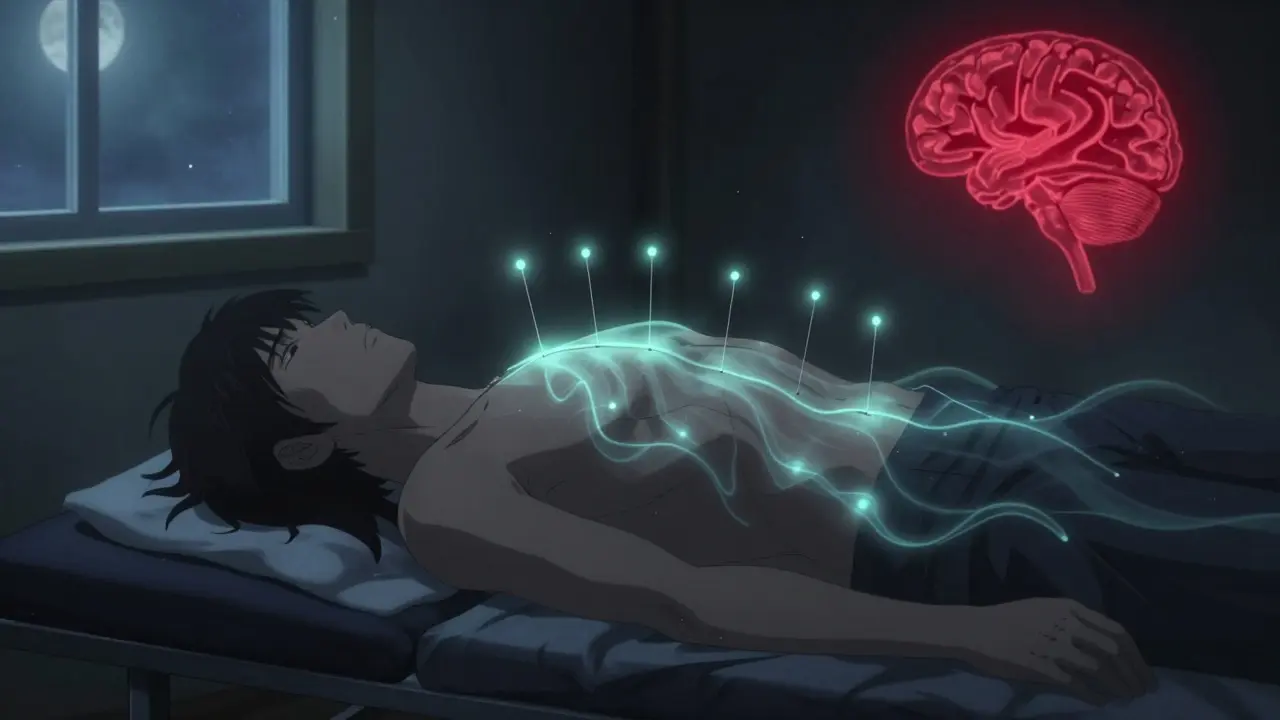
When you’ve been living with chronic pain for months-or years-every day feels like a battle. Painkillers lose their punch. Side effects pile up. And the fear of addiction lingers. That’s where acupuncture comes in. Not as a last resort, but as a real option backed by data from tens of thousands of patients. This isn’t just ancient tradition. It’s modern medicine with needles.
How Acupuncture Works for Pain (And Why It’s Not Just Placebo)
Acupuncture isn’t magic. It’s biology. The needles don’t just poke your skin-they trigger measurable changes in your nervous system. Studies using brain scans show acupuncture reduces activity in areas linked to pain processing, like the thalamus and insula. It also boosts natural painkillers: endorphins, serotonin, and dopamine. One 2018 analysis of nearly 21,000 patients found acupuncture delivered real, lasting pain relief-beyond what sham needles could do.
That’s key. Critics used to say: “It’s all in the head.” But when researchers compared real acupuncture to sham (using fake needles that don’t pierce the skin or hitting random points), the difference was small-but statistically real. For back pain, the effect size was 0.23 standard deviations. For osteoarthritis, 0.16. That’s not huge, but it’s not nothing. And it’s consistent across multiple high-quality trials.
What Conditions Does It Actually Help?
Not all pain is the same. And acupuncture doesn’t work the same for every type.
- Chronic low back pain (lasting over 12 weeks): This is where acupuncture shines. Multiple large studies show it reduces pain and improves movement better than no treatment at all-and as well as NSAIDs like ibuprofen.
- Knee osteoarthritis: Over 85% of osteoarthritis studies in major reviews focused on knee pain. Results? Clear reduction in pain and stiffness. Many patients delay or avoid knee replacement because acupuncture gives them enough relief to stay active.
- Tension-type headaches and migraines: A 2016 Cochrane review found acupuncture reduced headache frequency by half in some patients. It’s now recommended by the American Headache Society as a first-line preventive option.
- Neck pain: Similar to back pain. One study showed 57% of patients had at least a 50% drop in pain after 12 sessions.
For acute pain-like after surgery-evidence is weaker. Pain meds still win here. But acupuncture can help reduce how much opioid medication you need. One 2022 review found patients who got acupuncture after surgery used 25% fewer opioids in the first 24 hours.
What Happens During a Session?
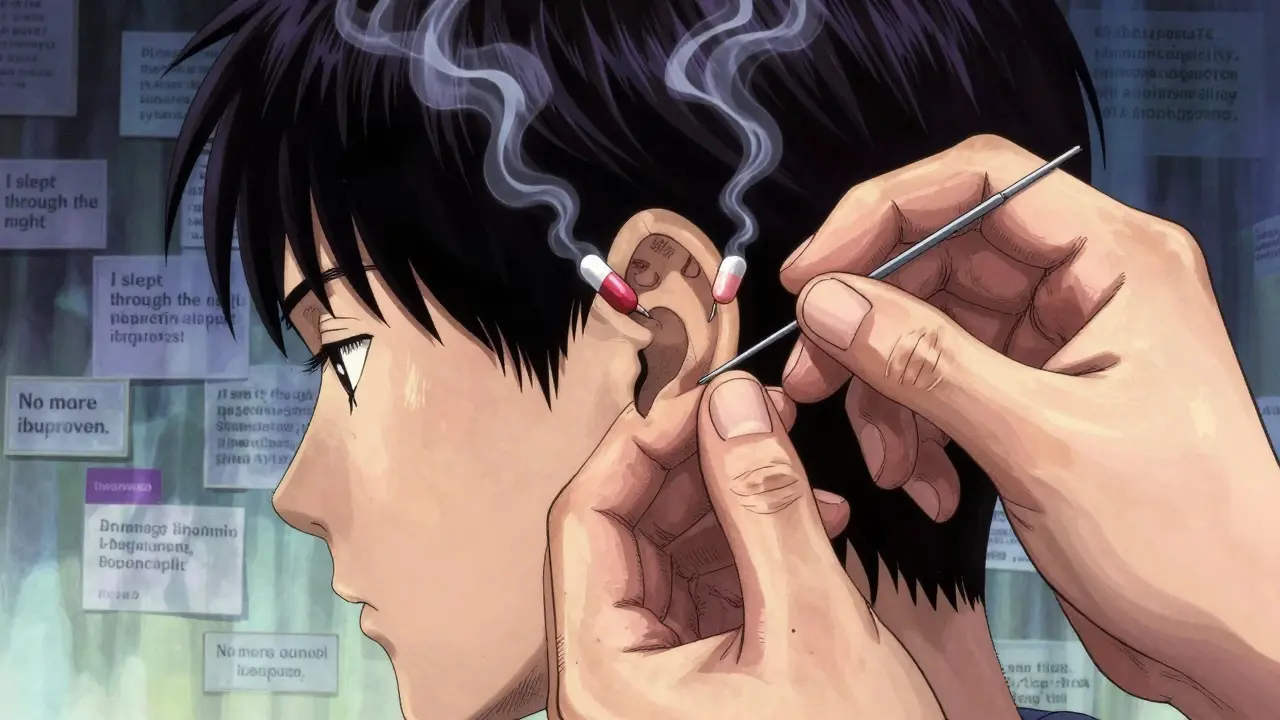
It’s not what you see in movies. No dramatic twirling of needles. No chanting. A typical session lasts 20-30 minutes. You lie down. The practitioner inserts thin, sterile, single-use needles-about as thick as a human hair-at specific points on your body. Common spots: hands, feet, lower back, ears, and scalp.
Most people feel a tiny pinch, then nothing. Some feel warmth, tingling, or heaviness around the needle. That’s normal. It’s called “de qi”-a traditional term meaning the energy has been engaged. The needles stay in for 15-30 minutes. Sometimes, the practitioner gently twists them or applies mild electric pulses (electroacupuncture).
There are three main ways points are chosen:
- Fixed formula: Same points for everyone with the same condition (e.g., always the same spots for lower back pain).
- Flexible formula: Core points plus a few extra based on your symptoms.
- Individualized: The practitioner picks points based on traditional Chinese diagnosis-like whether you have “qi stagnation” or “kidney deficiency.”
Most clinical trials use fixed or flexible formulas. That’s because they’re easier to study. But many practitioners believe individualization leads to better results.
How Many Sessions Do You Need?
You don’t fix chronic pain in one visit. It’s a process.
Most studies show the best results come from 6 to 12 sessions over 6 to 8 weeks. That usually means one or two visits per week. After that, maintenance sessions every 4 to 8 weeks help keep pain under control.
One survey of 1,200 patients found 68% noticed improvement by session six. That’s important. Many quit too early, expecting instant results. But acupuncture often works like physical therapy-it builds up over time.
Is It Safe?
Yes. Extremely.
A 2017 review of over 22,000 acupuncture treatments found serious side effects-like infections or punctured lungs-occurred in fewer than 0.05% of cases. That’s safer than taking ibuprofen long-term. The American Gastroenterological Association reports NSAIDs cause over 100,000 hospitalizations a year in the U.S. due to stomach bleeding and ulcers.
Minor side effects? Rare. A little bruising. Temporary dizziness. Fatigue. None of these are dangerous. And needles are always sterile, single-use, and FDA-regulated as Class II medical devices since 1996.
How Does It Compare to Other Treatments?
Let’s break it down:
| Treatment | Effectiveness (Chronic Pain) | Side Effects | Cost (Per Session) | Long-Term Use |
|---|---|---|---|---|
| Acupuncture | High (back, knee, headache) | Very low | $60-$120 | Safe and sustainable |
| NSAIDs (ibuprofen, naproxen) | Moderate to high | High (stomach, kidney, heart risks) | $5-$20/month | Not recommended long-term |
| Opioids | High (short-term) | Very high (addiction, overdose, constipation) | $50-$300/month | Risky, not advised |
| Sham acupuncture (placebo) | Mild | None | $0-$50 | Safe but limited |
Here’s the takeaway: Acupuncture doesn’t beat opioids in raw pain-numbing power-but it doesn’t risk addiction. It doesn’t beat NSAIDs in speed-but it doesn’t wreck your stomach. And it beats placebo. That’s the sweet spot.
What Do Real Patients Say?
Look at the data from patient reviews. On Healthgrades, acupuncture has a 4.2/5 rating across nearly 2,000 reviews. Reddit threads in r/acupuncture show 78% positive sentiment. Common themes:
- “I stopped taking ibuprofen every day.”
- “I can sleep through the night for the first time in years.”
- “My knee pain dropped so much I didn’t need surgery.”
But there are complaints too. The biggest? Cost. A single session runs $60-$120. And only 56% of U.S. private insurance plans cover it for pain (as of 2022). Medicare now covers it for chronic low back pain-about 12.5 million people benefit. But outside that, you’re often paying out of pocket.
Another issue: practitioner skill. One bad needle placement won’t hurt you-but it won’t help either. That’s why certification matters. In 47 U.S. states, practitioners must be certified by the NCCAOM. Look for that credential.
Why This Matters Now More Than Ever
The opioid crisis isn’t over. In 2022, 47,000 Americans died from opioid overdoses. Meanwhile, 50 million adults have chronic pain. The CDC now recommends non-drug options like acupuncture as first-line treatment.
Hospitals are catching on. The Joint Commission updated its standards in 2022 to require pain clinics to offer non-drug therapies-including acupuncture. The Veterans Health Administration now offers it in 64% of its facilities. Why? Because veterans have high rates of chronic pain and PTSD. And they need safe, sustainable relief.
Research is still growing. The NCCIH funded $15.7 million in new acupuncture studies in 2023. Scientists are now looking at how acupuncture affects inflammation, nerve signaling, and even the immune system. This isn’t fading away. It’s becoming part of mainstream care.
Who Should Try It?
If you have chronic pain and:
- Want to avoid or reduce painkillers
- Have side effects from NSAIDs or opioids
- Are looking for a long-term solution, not a quick fix
- Are willing to commit to 6-12 sessions
Then acupuncture is worth trying. It’s not a cure. But it’s one of the few pain treatments that’s effective, safe, and sustainable.
Don’t go in expecting miracles. Do go in with realistic expectations. And find a certified practitioner. You’re not just buying needles. You’re investing in a system that’s been tested, refined, and proven over decades-and now backed by hard science.
Does acupuncture hurt?
Most people feel a tiny pinch when the needle goes in, then nothing. Some feel a dull ache, warmth, or tingling-that’s normal. It’s not like getting a shot. The needles are extremely thin, about the width of a human hair. If you feel sharp pain, tell the practitioner. They’ll adjust it.
How long until I feel results?
It varies. Some feel better after one session, especially for tension headaches. But for chronic pain like back or knee issues, most people start noticing improvement around session six. Full benefits usually take 8-12 sessions. Think of it like physical therapy-it takes time to retrain your body’s pain response.
Is acupuncture covered by insurance?
Medicare covers acupuncture for chronic low back pain. Many private insurers don’t cover it yet, but that’s changing. As of 2022, only 56% of U.S. private plans included acupuncture. Check your plan. Some HSA/FSA accounts let you use pre-tax dollars for it. Even if it’s not covered, many people find the cost worth it compared to long-term drug use.
Can acupuncture help with acute pain, like after surgery?
It’s not the best choice for immediate post-op pain. Painkillers still work faster and more reliably. But acupuncture can help reduce how much opioid medication you need afterward. One review found patients used 25% fewer opioids in the first day after surgery when they had acupuncture. It’s a helpful add-on-not a replacement.
Are there risks of infection or nerve damage?
Extremely rare. Licensed practitioners use single-use, sterile, disposable needles-required by the FDA since 1996. A review of over 22,000 treatments found serious complications occurred in less than 0.05% of cases. That’s safer than taking ibuprofen daily for years. Always choose a certified practitioner. Avoid unlicensed “acupuncturists” in spas or malls.
Acupuncture for pain isn’t a fad. It’s a quiet revolution in how we treat chronic pain. No pills. No injections. Just needles, science, and time. And for millions of people, that’s enough.
Harrison Duncombe
I have been working in the pharmaceuticals industry for over two decades and have developed a passion for medications and their impact on health. I enjoy researching new treatments and writing about their effects on diseases. Sharing my knowledge about supplements is something I find fulfilling. Through my work, I aim to provide valuable insights and guidance to those seeking understanding in this complex field.
Look, I get that acupuncture has some data behind it, but let’s not pretend it’s some miracle cure. The effect sizes are tiny-0.23 SD for back pain? That’s barely better than a placebo. And don’t get me started on the whole ‘qi stagnation’ nonsense. You can’t measure chi with an fMRI, yet practitioners act like it’s a real biological pathway. I’ve seen people spend thousands on sessions while ignoring physical therapy, which has way stronger evidence. It’s not that I hate acupuncture-I hate when people elevate it to a sacred science without acknowledging how marginal the benefits really are. The FDA regulates needles, sure, but that doesn’t mean the underlying theory holds water. If you want pain relief, do the work: strengthen your core, stretch, move. Not sit there with a bunch of metal threads in your ear.
Acupuncture? In America? Next they’ll bring back bloodletting and call it ‘holistic.’ We’re paying for needles while our own doctors get paid to prescribe opioids? This is why the West is collapsing-people trade science for superstition. If it worked, China would be the healthiest nation on earth. But they’re not. They’re drowning in pollution, stress, and diabetes. This is cultural cringe dressed up as medicine.
Acupuncture is a CIA mind control experiment. The needles are laced with microchips. They track your pain signals and send data to satellites. The government wants us to believe it's natural so we stop asking questions. My cousin in Shanghai said the clinics are full of cameras. Why do you think they let it become legal? It's not about healing. It's about surveillance.
I tried acupuncture after a car accident and honestly? It changed my life. I was on gabapentin and still crying in the shower every night. After six sessions, I slept through the night. Not because it ‘fixed’ me-but because it helped my body stop screaming. I don’t care if it’s placebo or biology. If it lets you breathe again, isn’t that enough? I’m not a scientist. I’m just someone who finally felt human again.
While the empirical evidence for acupuncture in chronic pain management is modest, it remains a compelling example of integrative medicine’s potential to complement conventional therapeutics. The physiological mechanisms-particularly modulation of endogenous opioid systems and central pain processing-are increasingly well-documented in neuroimaging literature. That said, accessibility remains a critical barrier, particularly in jurisdictions where insurance coverage is inconsistent. A standardized, evidence-based protocol for point selection, session frequency, and practitioner credentialing would significantly enhance its clinical utility and public trust.
Someone just said they ‘felt human again.’ Wow. That’s the most honest thing I’ve read all week. Meanwhile, I’ve been Googling ‘why does my back hurt’ for 3 years. I’m not ready to stick needles in myself… but I’m ready to stop hating my life. Maybe I’ll try it. Maybe I won’t. But I’m tired of being told I’m stupid for considering it.
Acupuncture is a scam. The Chinese invented it because they had no real medicine. Now they sell it to gullible Americans for $100 a session. They don't care about your pain. They care about your money. And now the government is paying for it? This is why our healthcare system is broken. No science. Just needles. And you people believe it. I feel sick.
OMG YES. I’ve been doing acupuncture for 2 years for migraines 🙌 I go every 2 weeks now. I used to take 3-4 triptans a week. Now I take 1 every 2 months. My insurance doesn’t cover it, but I pay out of pocket because I’m not risking my liver or kidneys with NSAIDs. Also-my acupuncturist is a licensed NCCAOM pro with 15 years experience. DO NOT go to some spa with a 2-day certificate. I cried the first time I didn’t need my headache meds. It’s not magic. It’s medicine. And it’s worth every penny.
So we’re all just supposed to believe in magic needles now? Next thing you know, we’ll be paying for Reiki to cure cancer. I mean, sure, if you wanna spend $60 to feel like you’re getting a massage while someone whispers about ‘energy flow’-go for it. But don’t act like this is science. It’s spiritual capitalism. And honestly? I’m tired of people treating their pain like a spiritual journey instead of a medical problem.
I work in a VA hospital. We’ve had acupuncture available for veterans since 2018. Over 70% of those who try it report reduced opioid use. Not all of them get cured. But many get to sleep. Many get to walk without a cane. That’s not placebo. That’s dignity. I’ve seen people who were ready to quit life come back because they could finally sit through dinner with their grandkids. You can call it woo all you want. But if it helps someone not die from an overdose? I’ll take the needles.