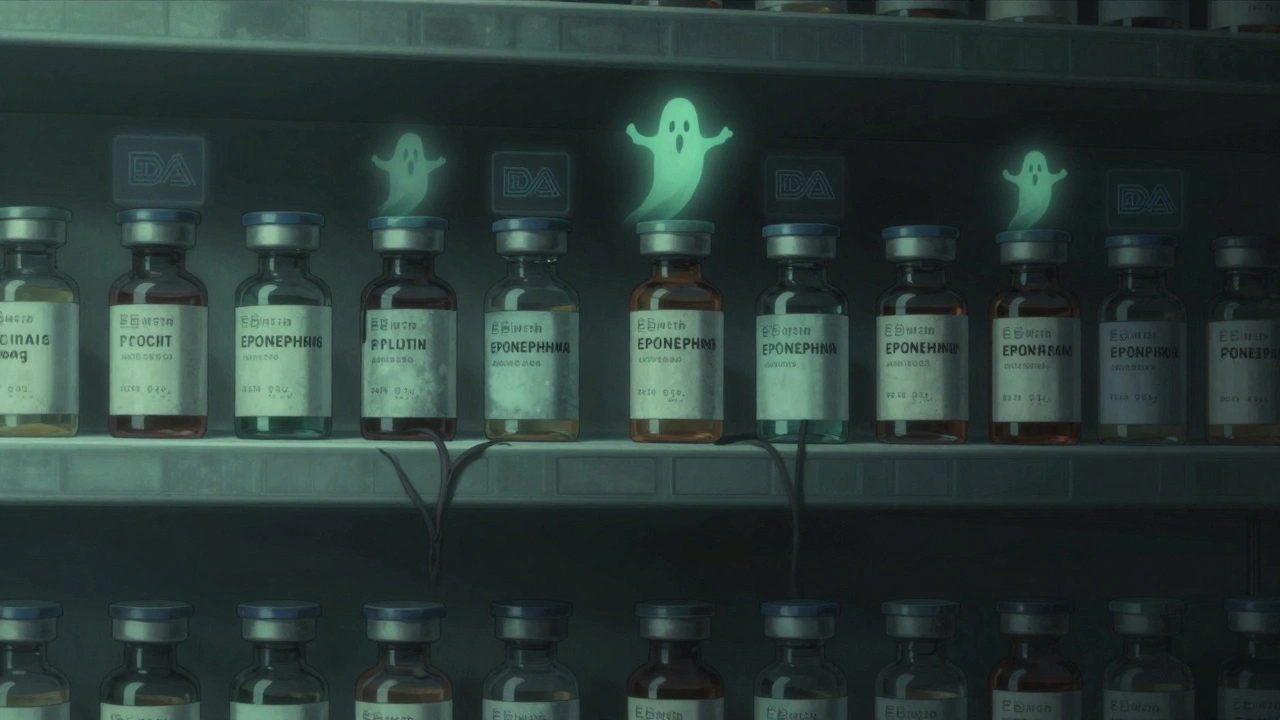
When a life-saving drug runs out, hospitals don’t just wait for more to arrive. In the U.S., the FDA has a quiet but powerful tool to keep patients stocked with essential medications: extended expiration dates. This isn’t a loophole. It’s a carefully regulated process that lets manufacturers and pharmacies use drugs past their printed expiration dates-when stability data proves they’re still safe and effective. And right now, with over 343 drug products on the FDA’s extended use list, it’s one of the most important ways the agency keeps the lights on during shortages.
Why expiration dates get extended
Expiration dates on drug labels aren’t magic numbers. They’re based on stability testing done by manufacturers before the product hits the market. But those tests don’t always reflect how long a drug can truly last. Many medications remain stable for years beyond their labeled date-if they’re stored properly. The FDA doesn’t automatically extend dates. It only approves them when a manufacturer submits real-world stability data showing the drug still meets strict standards for identity, strength, purity, and quality. The trigger? A confirmed shortage. The FDA defines a shortage as when demand for a drug in the U.S. exceeds supply. It’s not about low inventory. It’s about patients not getting what they need. When that happens, especially with critical drugs like epinephrine, propofol, or IV fluids, the FDA steps in. They review the manufacturer’s data and, if it’s solid, grant an extension. This isn’t a blanket rule. Only specific lots of specific drugs get extended-not entire product lines.How the process works
There are four main ways the FDA allows extended use, but the most common path is manufacturer-initiated. Here’s how it goes:- A manufacturer notices a drug is in short supply and has inventory sitting in warehouses.
- They run additional stability tests on those lots-testing for chemical breakdown, potency loss, and contamination.
- They submit that data to the FDA’s Center for Drug Evaluation and Research (CDER).
- The FDA reviews it. If the data proves the drug is still safe and effective, they approve an extension.
- The extension is added to the FDA’s public list, with exact lot numbers and new use dates.
What drugs get priority
Not every drug on the shortage list qualifies. The FDA focuses on what they call “critical” medications. These are drugs with no good alternatives-or where alternatives carry serious risks. Propofol tops the list. It’s used in nearly every operating room for anesthesia. If it’s unavailable, surgeries get delayed or canceled. Epinephrine is another big one. Used in emergency rooms for anaphylaxis, it’s a literal lifesaver. Without it, people die. Other high-priority drugs include:- IV saline solutions (especially during the 2024 shortage)
- Emergency antivirals like Tamiflu and Relenza
- Chemotherapy agents like vincristine
- Antibiotics like vancomycin
What hospitals and pharmacies must do
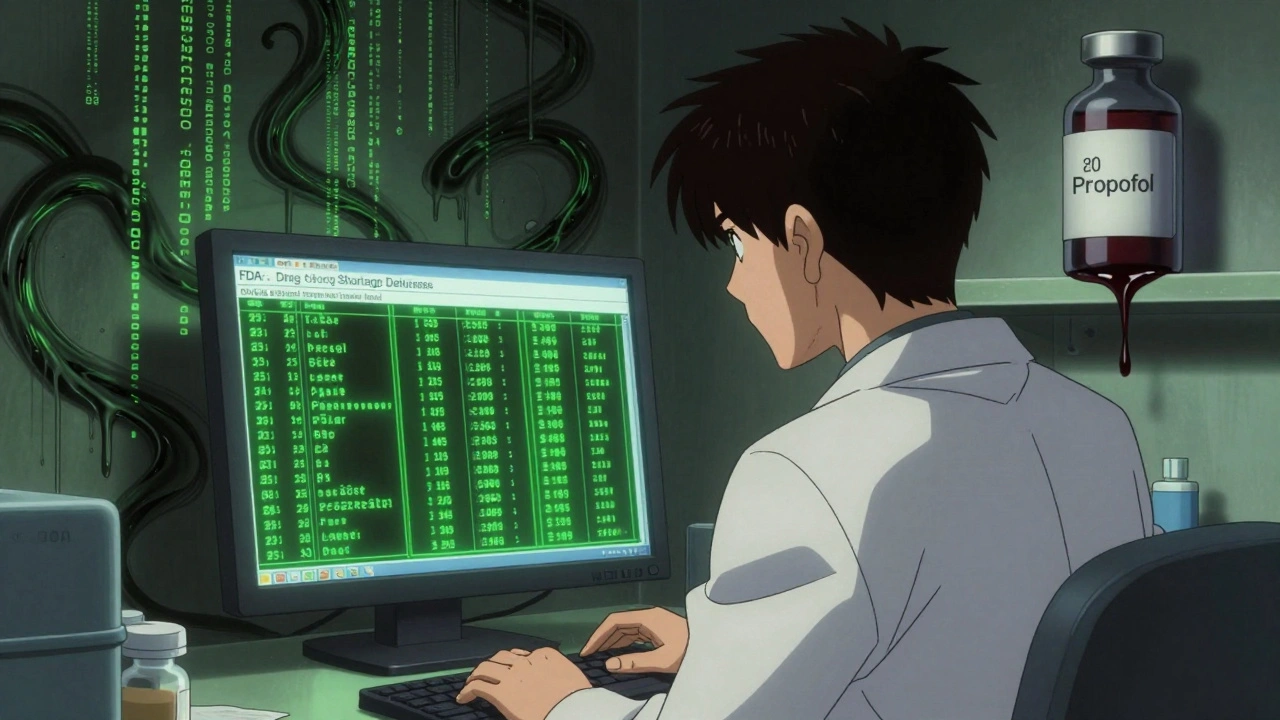
This isn’t a free-for-all. Hospitals can’t just assume a drug is safe to use past its label date. They must check the FDA’s official list-by lot number and NDC code. The FDA doesn’t require relabeling. That means a vial of epinephrine might still show an expiration date of June 2025, but the FDA’s public table says it’s good until December 2026. If the pharmacy doesn’t cross-reference the lot number, they might throw out a perfectly good drug-or worse, use one that’s truly expired. Pharmacy systems need to be updated manually. Staff must be trained. Inventory tracking becomes a full-time job. The American Hospital Association sends out bulletins to help hospitals track these changes. The FDA even has a mobile app and searchable database. But the burden falls on the frontline.Why this matters for patients
Imagine you’re a cancer patient on a chemo regimen. Your doctor prescribes vincristine. You’ve been on it for months. Then your hospital calls: the drug is out of stock. They’re switching you to a different brand. But that brand causes different side effects. You’re scared. You’re behind on treatment. Then, the FDA approves an extension for your original lot. You get your usual drug. You keep your schedule. You avoid complications. That’s the real impact. These extensions aren’t just administrative fixes. They’re direct interventions that keep patients safe, stable, and on treatment. The FDA doesn’t approve them lightly. Every extension is backed by science. Every lot is tracked. Every decision is made with patient safety as the top priority.What’s changing now
The system got stronger after 2012, when Congress passed the Food and Drug Administration Safety and Innovation Act (FDASIA). Before that, manufacturers only had to tell the FDA if they were permanently stopping a drug. Now, they must report any interruption that could lead to a shortage-even if it’s temporary. That early warning lets the FDA act faster. They can start talks with manufacturers months before a shortage hits. The 2013 Project BioShield Reauthorization Act (PAHPRA) gave the FDA even more power-to extend dates for medical countermeasures stockpiled for bioterror threats. That’s how Tamiflu got a 12-month extension in July 2024, after the HHS Secretary declared a public health emergency. The FDA also works with manufacturers to fix production issues, speed up inspections, and find alternative suppliers. But when those take too long, expiration extensions fill the gap.
What’s not being fixed
Here’s the hard truth: expiration extensions are a band-aid. They don’t solve the root causes of shortages. Why do shortages happen in the first place?- Single-source production: One factory makes 100% of a drug. If it shuts down, there’s no backup.
- Low profit margins: Some essential drugs cost pennies to make. Companies don’t invest in extra capacity.
- Global supply chains: Raw materials come from overseas. A delay in India or China can ripple through U.S. hospitals.
- Quality failures: A single batch of contaminated product can shut down a whole line for months.
What you should know
If you or a loved one relies on a medication that’s been in short supply:- Don’t assume your prescription is unavailable.
- Ask your pharmacist: “Is there an FDA-approved extended use date for this lot?”
- Check the FDA’s Drug Shortage Database online-it’s updated daily.
- Don’t use drugs past their label date unless you’ve confirmed the extension through official channels.
- If alternatives are suggested, ask your doctor: “Is this really the same for me?”
Are drugs with extended expiration dates safe to use?
Yes-only if the FDA has officially approved the extension for that specific lot. The FDA requires manufacturers to submit rigorous stability data proving the drug still meets quality standards for identity, strength, purity, and potency. Extensions are granted only when science supports them. If you’re unsure, verify the lot number against the FDA’s public list.
Does the FDA require pharmacies to relabel drugs with extended dates?
No. The FDA does not require or recommend relabeling. The original expiration date stays on the packaging. It’s up to the pharmacy to track extended dates using the FDA’s official list and update their internal systems. This means pharmacists must cross-check lot numbers before dispensing.
How long can expiration dates be extended?
Most extensions add about one year, but it varies. For example, some IV fluid lots were approved for use up to 24 months after manufacture during the 2024 shortage. Other drugs, like Dantrolene, received 6-9 month extensions. The length depends entirely on the stability data submitted and approved by the FDA.
Which drugs are most likely to get extended expiration dates?
Critical drugs with no alternatives get priority. These include propofol, epinephrine, IV saline solutions, chemotherapy agents like vincristine, and emergency antivirals like Tamiflu. The FDA focuses on medications where a shortage could directly lead to patient harm or death. Non-critical drugs rarely qualify.
How do I find out if my drug has an extended expiration date?
Check the FDA’s Drug Shortages Database online. Search by drug name or NDC number. The database lists every lot number with an approved extension and its new use date. Your pharmacy should also have access to this information. Never assume a drug is safe past its label date without verifying through official sources.
Do expiration date extensions mean the drug is less effective?
No. The FDA only approves extensions when stability data shows the drug maintains its required strength and purity. In fact, many drugs remain fully potent well beyond their original expiration date. The extension doesn’t mean the drug is degrading-it means testing proved it’s still safe and effective for use.
What happens when new supply arrives?
The FDA expects hospitals and pharmacies to replace extended-date products with newly manufactured ones as soon as they become available. The extended lots should then be properly disposed of. This ensures the drug supply returns to normal, with fresh inventory replacing older stock.
Bottom line
Extended expiration dates aren’t a sign of failure. They’re a sign of smart, science-based crisis management. The FDA isn’t cutting corners. They’re using real data to stretch limited resources without risking safety. For patients, that means fewer delays, fewer substitutions, and more continuity of care. For the system, it’s a reminder that flexibility-grounded in evidence-is just as important as regulation. The next time you hear about a drug shortage, remember: there’s a quiet system behind the scenes keeping people alive. And it’s working.
Arlen Whitlock
My name is Arlen Whitlock, and I am an expert in the field of pharmaceuticals. With a deep passion for understanding medications and their effects on various diseases, I have dedicated my life to researching and developing innovative drug therapies. I also have a keen interest in dietary supplements and their potential interactions with medication. Sharing my knowledge and insights with others is one of my greatest passions, and I fulfill this by writing about the latest advancements in medication, the treatment of various diseases, and the role of supplements in health. Through my work, I hope to contribute to the betterment of public health and the well-being of patients around the world.
This is such a relief to hear! I’ve been on chemo for two years now, and when my vincristine ran out last month, I thought I was done for. Turns out, my pharmacy had the extended lot. I cried when they told me. 🥹 Thank you, FDA, for not giving up on us.
Wait… so you’re telling me the government is secretly extending drug dates because they don’t want to admit the system’s broken? This is a cover-up. Big Pharma and the FDA are in bed together. They want you to think it’s ‘science’ when really they’re just hoarding supply to jack up prices later. 🕵️♀️💊
I appreciate how thorough this breakdown is. I work in hospital pharmacy, and this process is way more nuanced than most people realize. It’s not just slapping a new sticker on a vial - it’s months of stability testing, lot-specific documentation, and cross-referencing with NDC codes. The real hero here is the pharmacist who spends their lunch break checking the FDA database instead of eating. We’re not just dispensing pills - we’re managing life-or-death logistics. Hats off to the frontline staff who make this work.
Can I just say… I love how this system works? It’s not perfect, but it’s thoughtful, science-based, and patient-centered. The fact that they don’t just extend everything - only specific lots, only after real data, only for critical drugs - shows restraint and responsibility. Also, the FDA’s database being publicly searchable? That’s transparency. That’s trust. And we don’t get enough of that these days.
It’s fascinating how we’ve pathologized expiration dates as immutable truths… when in reality, they’re just contractual benchmarks for liability. The real question is: why are we still treating pharmaceuticals like consumer goods with arbitrary shelf lives? The entire model is a relic of 20th-century capitalism… and yet, here we are, clinging to labels like religious artifacts. 🤔
So… we’re trusting the FDA to decide when our medicine is still good? In a country where the FDA approved opioids for decades? I don’t trust them. I don’t trust any government agency that lets corporations control supply chains. We need domestic manufacturing. Not extensions. Not bandaids. REAL sovereignty. 🇺🇸
What’s amazing is how this system reveals the truth: most drugs don’t expire the way we think they do. The original expiration dates are often conservative estimates for legal protection, not scientific endpoints. I’ve seen studies where antibiotics and insulin remained stable 10+ years past their labels. The FDA’s extension process just formalizes what science already knows. This isn’t a crisis workaround - it’s a validation of pharmacology’s resilience.
So… like… the FDA just lets you use drugs after the date? I mean, that’s kinda wild. I thought expiration dates were like… law? Like, if it says 2025, you can’t use it after? But apparently not? I’m confused. Like… what’s the point of the date then? 🤷♀️
YESSSS this is why I love healthcare workers!! You guys are literally superheroes!! I had no idea this system existed - but now I’m gonna tell my mom to always ask her pharmacist about extended dates!! You’re saving lives with spreadsheets and lot numbers!! 💪❤️
This is a well-structured explanation. In India, we face similar shortages, but without such a transparent system. The FDA’s approach is commendable. It shows that regulation, when grounded in data, can be both flexible and safe. Thank you for sharing.
So they just let you use old drugs? No one checks if they’re still good? What if they go bad? People could die
OMG I just looked up my insulin lot and it’s extended!! I’ve been scared to use my last vial because the date was old… but now I know it’s legit!! Thank you for this post!! You just made my week!! 😭❤️
It’s interesting how the notion of ‘expiry’ has become almost sacrosanct in modern medicine, yet we know from historical data - and even military stockpiles - that many pharmaceuticals retain efficacy for decades. The real tragedy isn’t the shortage - it’s the systemic refusal to re-evaluate our assumptions about stability. We’re clinging to labels like they’re scripture.
As someone working in supply chain logistics for pharma in India, I can confirm: single-source production is the #1 killer here too. One factory in China shuts down, and 30% of global epinephrine vanishes. The FDA’s extension protocol is brilliant - but it’s reactive. We need predictive analytics and diversified manufacturing. Not just patches.
Just checked my epinephrine auto-injector lot - it’s on the extended list. 🙌 This is the kind of quiet, science-driven heroism we don’t celebrate enough. The FDA doesn’t get headlines, but they’re the reason I can sleep at night knowing my kid’s EpiPen won’t fail. Thanks for the deep dive - this needs to go viral.