
Drug-Induced Pancreatitis Symptom Checker
What This Tool Does
This symptom checker helps you determine if your symptoms might indicate drug-induced pancreatitis. If you're taking any of the high-risk medications mentioned in the article and experience persistent abdominal pain or other warning signs, this tool can guide you toward appropriate next steps.
1. Medications You're Taking
2. Symptoms You're Experiencing
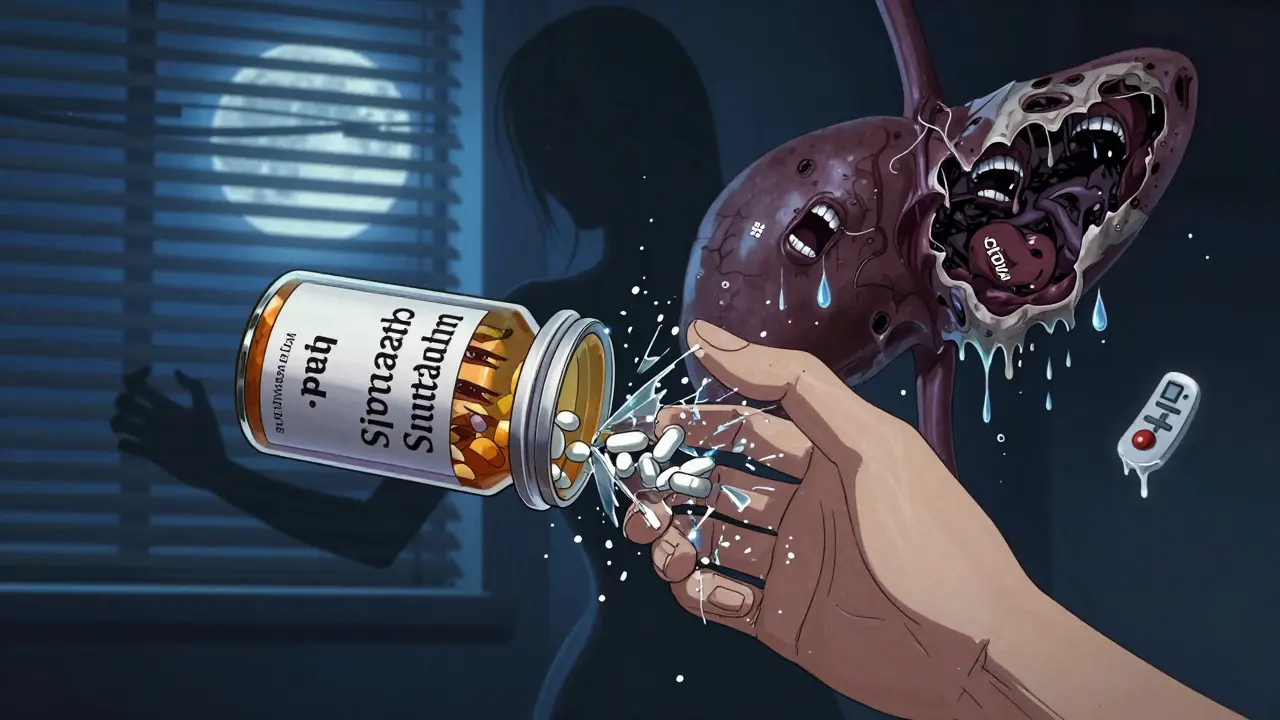
When you take a new medication, you expect relief-not a life-threatening emergency. But for some people, common prescriptions can trigger severe pancreatitis, a dangerous inflammation of the pancreas that can lead to organ failure, infection, or even death. Unlike gallstones or alcohol, which are well-known causes, drug-induced pancreatitis often flies under the radar. It doesn’t come with a warning label everyone reads. And by the time symptoms show up, it’s already advanced.
What Exactly Is Drug-Induced Severe Pancreatitis?
The pancreas sits behind your stomach and helps digest food and regulate blood sugar. When it becomes inflamed, it starts digesting itself. In severe cases, parts of the organ die (necrosis), fluid builds up, and infections spread. This isn’t just bad stomach pain-it’s a medical crisis. About 1.4% to 3.6% of all acute pancreatitis cases come from medications, according to the National Institute of Diabetes and Digestive and Kidney Diseases. But among those, 20% are severe. That means roughly 1 in 5 people who develop drug-related pancreatitis ends up in intensive care. Mortality rates hit 15% to 30%, higher than gallstone-induced cases in some studies. What makes this different from other types? The biggest advantage is that it’s often reversible-if caught early. Stop the drug, and the pancreas can heal. But if you miss the signs, or if doctors dismiss the symptoms, the damage can become permanent-or fatal.Top Medications Linked to Severe Pancreatitis
Not all drugs carry the same risk. Research has identified eight classes with strong evidence of causing severe pancreatitis:- ACE inhibitors (like lisinopril, enalapril)
- Antiretrovirals (especially didanosine in HIV treatment)
- Diuretics (furosemide, hydrochlorothiazide)
- Hypoglycemics (exenatide, sitagliptin, SGLT2 inhibitors like dapagliflozin)
- Oral contraceptives (those with ethinyl estradiol)
- Statins (simvastatin, atorvastatin)
- Valproic acid (used for epilepsy and bipolar disorder)
- Azathioprine (used for autoimmune diseases like Crohn’s)
Warning Signs You Can’t Ignore
The classic symptom is sudden, intense upper abdominal pain that radiates to your back. But here’s the catch: drug-induced pancreatitis doesn’t always hit fast. With gallstones, pain comes on in minutes. With drugs? It builds slowly. Most people report symptoms 7 to 14 days after starting the medication. Some cases take months. That delay is why so many patients are misdiagnosed. Look for these red flags:- Persistent upper belly pain, especially after meals
- Pain that wraps around to your back
- Nausea or vomiting that won’t go away
- Fever above 38°C (100.4°F)
- Rapid heartbeat (over 90 bpm)
- Unexplained weight loss or loss of appetite
How Doctors Diagnose It
There’s no single blood test that says, “This drug caused it.” Diagnosis is a puzzle. Doctors use three criteria from the Revised Atlanta Classification:- At least two of the three classic symptoms (abdominal pain, elevated lipase, imaging findings)
- Timing: Symptoms start within 4 weeks of starting the drug
- Exclusion: No other cause (gallstones, alcohol, genetics, trauma)
Immediate Treatment: What Happens in the Hospital
Once diagnosed, treatment starts immediately. The goal? Support the body while the pancreas heals. First 24-48 hours: Aggressive IV fluids. You’ll get 250-500 mL per hour to keep your blood pressure up and your pancreas perfused. Too little fluid? Higher risk of necrosis. Too much? Risk of fluid overload. Doctors monitor your hematocrit to keep it between 35% and 44%. Pain control: Acetaminophen is first-line. If that’s not enough, low-dose morphine is used. Avoid meperidine-it can worsen spasms. Nutrition: You’ll be NPO (nothing by mouth) at first. But don’t stay that way long. The European Association for the Study of the Pancreas recommends starting enteral feeding through a tube in the small intestine within 24-48 hours. Feeding the gut helps the pancreas heal. Starving it doesn’t. Antibiotics: Not routinely given. Only if an infection develops in dead tissue (infected necrosis). Then, meropenem is the go-to. The most critical step? Stopping the drug. Within 24 hours of suspicion. Delaying beyond that increases complication risk by 37%, according to a 2022 meta-analysis. Every hour counts.
What Happens After You Leave the Hospital?
Recovery isn’t instant. Even after the pain fades, your pancreas needs weeks to heal. You’ll need follow-up scans to check for fluid collections or pseudocysts. Some people develop diabetes later if insulin-producing cells were damaged. You’ll never take the offending drug again. That’s non-negotiable. But what about other medications? If you’re on multiple prescriptions, your doctor may need to adjust your regimen. For example, someone on azathioprine for Crohn’s might switch to another immunosuppressant. Someone on lisinopril might go to a different class of blood pressure meds. And here’s the big question: Could it happen again? With the same drug? No. But with a similar one? Possibly. Some drugs in the same class can cross-react. If you had pancreatitis from one statin, you’re at higher risk with another.Why This Problem Is Getting Worse
The number of drug-induced pancreatitis cases is rising. The FDA recorded over 4,200 cases in 2022-up nearly 13% from the year before. Why?- More people are on multiple medications. The average patient with drug-induced pancreatitis takes 5.2 drugs. Older adults are especially vulnerable.
- New drugs are being approved faster. SGLT2 inhibitors for diabetes were added to the warning list in 2023 after 87 cases in just 18 months.
- Immunotherapy for cancer is causing more cases. One study found 9.2% of patients on ipilimumab-nivolumab developed pancreatitis, and 37% of those were severe.
What You Can Do Right Now
If you’re taking any of the high-risk medications listed above:- Know the warning signs. Don’t wait for “classic” pain.
- Keep a list of all your meds. Include doses and start dates.
- If you develop new abdominal pain, mention your meds to your doctor. Say: “Could this be drug-induced pancreatitis?”
- Ask for a lipase test. Don’t accept “it’s just indigestion.”
- Don’t stop any medication without talking to your doctor-but don’t delay asking questions either.
Can any medication cause pancreatitis?
Not every medication can, but over 100 drugs have been linked to pancreatitis. The highest risk comes from eight classes: ACE inhibitors, antiretrovirals, diuretics, diabetes drugs like exenatide and SGLT2 inhibitors, oral contraceptives, statins, valproic acid, and azathioprine. Most other drugs carry very low or unproven risk.
How long after starting a drug does pancreatitis usually appear?
Symptoms typically develop 7 to 14 days after starting the medication, but cases have been reported as early as 24 hours or as late as several months. This delayed onset is why it’s often missed-it doesn’t match the sudden pain seen with gallstones.
Is pancreatitis from drugs always reversible?
In mild to moderate cases, yes-up to 75% of patients fully recover after stopping the drug. But in severe cases with necrosis or organ failure, recovery is slower and may involve permanent damage, such as diabetes or chronic pancreatitis. Early discontinuation is critical to maximize recovery chances.
Can I take another drug in the same class if I had pancreatitis from one?
No. If you had pancreatitis from one drug in a class-like lisinopril-you should avoid all others in that class. Cross-reactivity is common. For example, if you reacted to simvastatin, you’re at higher risk with atorvastatin or rosuvastatin. Always inform your doctor of your history.
Should I get genetic testing before taking azathioprine or valproic acid?
For azathioprine, yes-especially if you’re of Asian or Jewish descent. A genetic test for TPMT enzyme variants can identify people at high risk before starting the drug. For valproic acid, genetic testing isn’t standard yet, but if you have a family history of pancreatitis or liver issues, talk to your doctor about alternatives.
What should I do if my doctor dismisses my abdominal pain?
Insist on a lipase test. If they refuse, ask for a referral to a gastroenterologist. Many cases are missed because symptoms are mistaken for gastritis or gallbladder issues. Document your symptoms, medication list, and timing. Bring this information with you. Your life may depend on it.

Harrison Duncombe
I have been working in the pharmaceuticals industry for over two decades and have developed a passion for medications and their impact on health. I enjoy researching new treatments and writing about their effects on diseases. Sharing my knowledge about supplements is something I find fulfilling. Through my work, I aim to provide valuable insights and guidance to those seeking understanding in this complex field.
bro i was on lisinopril for 8 months and one day my stomach felt like a grenade went off inside me 😵💫 they thought it was food poisoning... turns out my lipase was through the roof. i almost died. now i just drink water and stare at the sky 🌌
this is the kind of post that makes you pause and check your meds. i'm on simvastatin and have had mild stomach stuff for weeks. didn't think much of it. maybe i'll call my doc tomorrow. thanks for the wake-up call 🙏
While the anecdotal evidence presented is compelling, one must consider the statistical baseline of pancreatitis incidence in the general population. The attribution of causality without controlled longitudinal studies remains methodologically suspect. One cannot conflate temporal association with causal inference, particularly in polypharmacy contexts.
so basically if you're on meds, your pancreas is just waiting for its turn to revolt? 😅 i mean... i get it. but also... why do we still trust pills that can turn our organs against us? 🤔
my mom had this happen after starting a new diabetes pill. she didn't know what was wrong. she just kept saying her belly hurt. took weeks to figure it out. please tell your doctors about your meds. it matters.
i just read this and now i'm terrified of every single pill i've ever taken. i'm on like 7 things. one of them is probably slowly digesting my pancreas right now. i don't even know what to do. should i stop everything? go live in the woods? drink only moonwater? my doctor says i'm "overreacting" but what if they're wrong? what if i'm the one who dies and they're just another statistic in their spreadsheet? i can't sleep. i'm crying. this is real. this is happening. help.
How quaint. Another ‘awareness’ post from someone who clearly doesn’t understand pharmacovigilance. The FDA has been tracking these cases for decades. The real issue? Patients who demand unnecessary tests because they watched a YouTube video. Lipase levels fluctuate. Symptoms are nonspecific. You’re not saving lives-you’re creating a culture of medical anxiety and unnecessary ER visits. Stop fearmongering.
i'm from indonesia and we don't have this kind of info here. my aunt died from this. no one knew. they said it was "stomach flu." please translate this into more languages. people need to know. 💔
you guys are doing amazing just by reading this and caring. if you're on any of these meds and feel off? don't wait. don't doubt yourself. your body isn't crazy. it's screaming. go get that lipase test. you're not being dramatic-you're being smart. and if someone tells you otherwise? tell them you're not just a patient-you're your own best advocate. you got this. 💪
i read this and immediately checked my meds. i'm on exenatide and have had weird stomach pain for a month. i'm not scared, i'm ready. i'm calling my doctor tomorrow. if this saves even one person, it's worth it. thank you for writing this. 🙌